
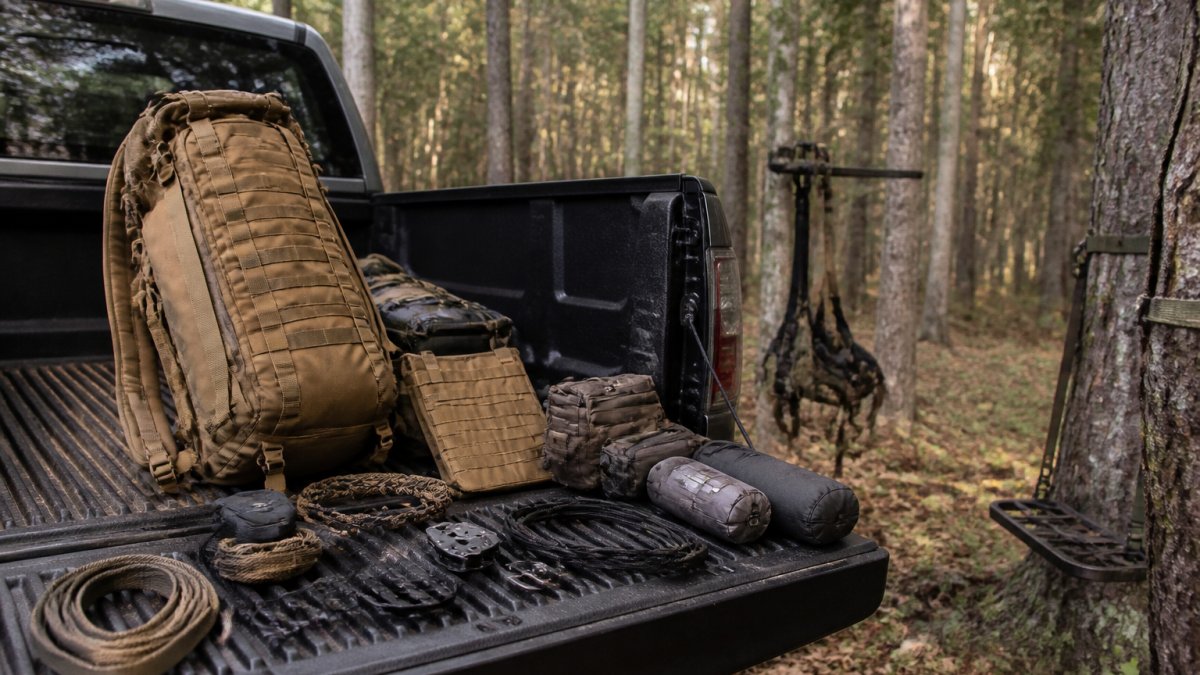
Table of Contents
- Understanding Mobile Hunting Gear Setup Fundamentals
- Climbing Sticks for Saddle Hunting and One-Stick Systems
- Saddle Hunting Gear List: Core Components and Compatibility
- Lightweight Hunting Pack and Gear Bag Choices
- Mobile Deer Hunting Checklist: What to Carry and Configuration
- Weight Trade-Offs, Setup Testing, and Fall-Risk Management
- Terrain, Access, and Hunting-Style Decision Guide
- Frequently Asked Questions
Last Updated: October 15, 2026
Understanding Mobile Hunting Gear Setup Fundamentals
A mobile hunting gear setup is a system of lightweight, packable equipment for hunters who move between locations rather than sitting a fixed position. It combines climbing sticks, platforms, harnesses, and gear packs into an integrated whole that minimizes weight while maximizing field functionality.
Mobile hunting lets hunters scout multiple properties, adapt to changing deer movement, and respond to fresh sign without being anchored to pre-positioned equipment. A dialed-in system flows from truck to tree to shot opportunity; a thrown-together collection creates friction at every transition.
This guide walks you through building a system that's capable and truly portable.
The fundamentals of mobile hunting gear setup rest on five pillars: climbing efficiency, platform security, fall protection, gear organization, and weight management.
Climbing Sticks for Saddle Hunting and One-Stick Systems
Climbing sticks form the foundation of vertical access in mobile hunting. Your choice between a traditional stick progression and a minimalist one-stick approach determines how quickly you reach your platform and how much energy you expend.
One-stick setups compress climbing into a single efficient movement: one strategically placed stick reaches your platform height, then comes down for the descent.
The trade-off is precision: one-stick systems require careful tree selection and exact platform placement. That's where saddle hunting excels, the saddle provides stability and positioning flexibility that traditional platforms can't match, making one-stick climbing viable for more tree types.
Traditional climbing stick progressions (three to five sticks) offer more versatility across tree sizes and heights, but add weight and complexity. Each stick is another potential hang-up point, and that friction compounds for hunters moving multiple times per season.
The practical choice depends on hunting style. Run-and-gun hunters who cover ground and hunt new trees frequently benefit from one-stick systems.
Saddle Hunting Gear List: Core Components and Compatibility
A complete saddle hunting setup includes your saddle, platform, climbing sticks, harness system, attachment hardware, and backup safety equipment. Each component must be compatible with the others; incompatible pieces create security gaps or force you to carry workarounds.
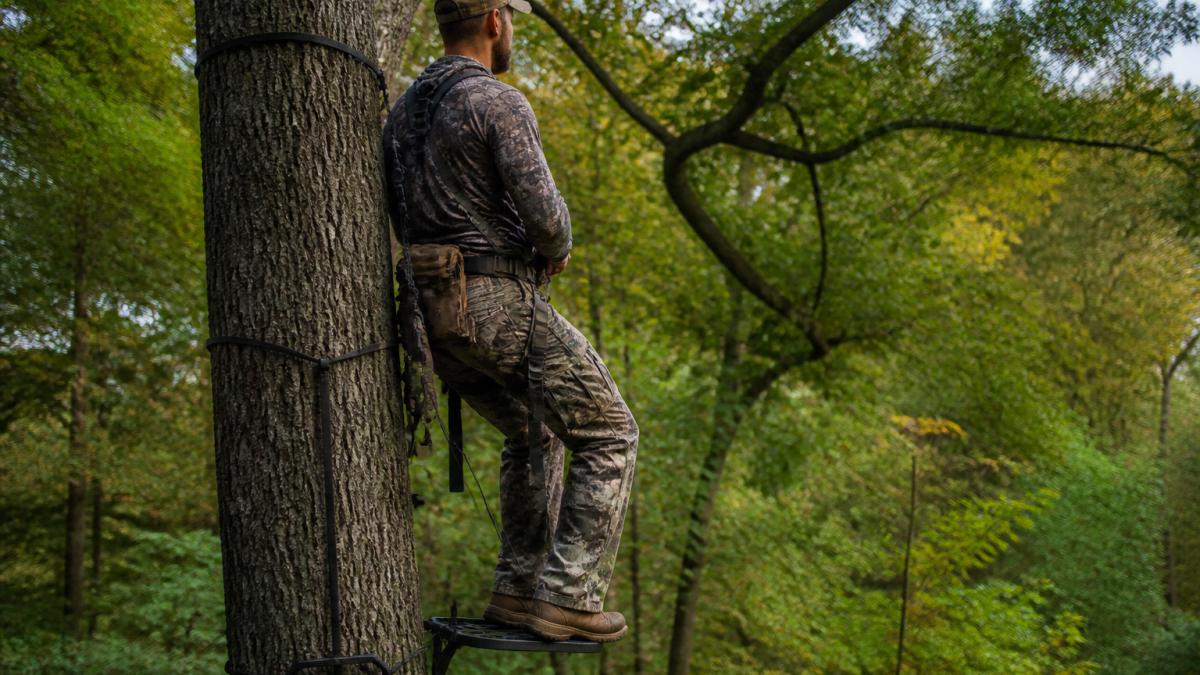
Your saddle is your anchor point, suspending your body weight and positioning you for shooting and movement. Quality saddles distribute pressure across hips and thighs for multi-hour sits; budget saddles concentrate pressure in one area, forcing you down after 90 minutes.
The platform under your feet is non-negotiable for comfort and safety. Standing in stirrups alone for hours creates fatigue and poor shot positioning; a platform rests your legs, stabilizes your core, and improves accuracy by eliminating micro-movements from leg fatigue.
Platforms, Aiders, and Climbing Aids
Your platform serves three functions: foot support during the hunt, a stable base for shooting, and a step during climbing. A wobbly platform creates constant micro-adjustments that tire your legs and compromise your draw at the critical moment.
Modern platforms range from 12 to 18 inches wide, with depth typically 8 to 12 inches.
Step aiders, small foot holds attached above your main platform, extend your reach to higher attachment points without standing on your platform.
Climbing aids like aiders or foot stirrups attached to your climbing sticks give your feet a solid step rather than the stick itself, reducing leg fatigue and improving climbing speed when moving between multiple trees in a morning.
Harnesses and Fall-Protection Equipment
Your harness system is your insurance policy, the only thing between you and a fall if you slip while climbing or lose footing in the tree.
Full-body harnesses are standard because they support your torso and legs during a fall, not just your waist; a waist harness alone can cause internal injuries.
Fall arrest systems, backup ropes and tethers that catch you if you fall, are essential.
Proper fit is critical: too loose and the harness shifts during climbing; too tight and it restricts blood flow and creates pressure points. Adjust it before season starts and verify fit with full gear loaded.
Lightweight Hunting Pack and Gear Bag Choices
Your pack carries everything you can't wear: extra layers, food, water, rangefinder, calls, ammunition, and backup equipment. Its weight and organization directly affect hunting efficiency and comfort during long sits.
Lightweight packs for mobile hunting typically weigh 1.5 to 3 pounds empty with 800 to 1,500 cubic inches of capacity.
Pack organization matters as much as total weight. Dedicated pockets for gear types, rangefinder, phone, snacks, and water let you access items without unpacking everything, and quiet, smooth materials prevent shifting and noise.
The 3D Hunting Solutions Pack Rat system combines your platform carrier with your gear organization in a single integrated pack. The Pack Rat carries your platform and climbing sticks vertically while keeping your platform centered to prevent hang-ups during entry and exit.

For hunters who prefer separate platforms and gear packs, the Tree Hugger provides modular gear organization that attaches directly to your tree.
Mobile Deer Hunting Checklist: What to Carry and Configuration
A mobile deer hunting checklist ensures you don't forget critical items while preventing overpacking. The items you carry depend on your hunting style, but certain essentials apply universally.
| Item Category | Essential Items | Weight Impact | Notes |
|---|---|---|---|
| Climbing | Climbing sticks, harness, backup tether | 8-12 lbs | Test compatibility before season |
| Platform | Platform, step aider if needed | 3-6 lbs | Match tree diameters on your property |
| Gear Organization | Pack or gear bag, molle attachments | 2-4 lbs | Choose modular over monolithic |
| Shooting | Bow, quiver, arrows, broadheads | 4-6 lbs | Verify broadhead sharpness weekly |
| Clothing | Base layer, mid-layer, outer layer | 3-5 lbs | Layer for temperature changes |
| Accessories | Rangefinder, calls, knife, flashlight | 2-3 lbs | Keep in organized pockets |
| Sustenance | Water, snacks, energy bars | 2-4 lbs | Minimize packaging waste |
| Safety | First aid, whistle, headlamp | 1-2 lbs | Non-negotiable backup items |
A properly configured mobile hunting setup typically weighs 25 to 35 pounds including your bow and all gear, manageable for most hunters over a full day but requiring discipline about what you carry.
A common mistake is carrying backup gear for scenarios that rarely happen. Extra broadheads, unused layers, and redundant tools add weight without proportional benefit. Carry one backup broadhead, not five, and bring only layers you'll wear based on the forecast. This discipline separates efficient mobile hunters from those who exhaust themselves carrying dead weight.
Weight Trade-Offs, Setup Testing, and Fall-Risk Management
Every component in your mobile hunting gear setup involves a weight trade-off. Lighter materials cost more. Redundant safety equipment adds ounces. Additional organizational pockets increase pack weight.
Platform weight is a primary trade-off.
Setup testing before season is non-negotiable. Assemble your complete system at home, climb a practice tree, spend an hour in position, and verify everything works together.
Fall-risk management requires honest assessment of your climbing ability and equipment condition.
A common oversight is skipping equipment inspection between hunts. Climbing sticks can crack or bend, harness webbing can fray, and bridges and tethers can develop weak points.
Terrain, Access, and Hunting-Style Decision Guide
Your terrain and access patterns determine which mobile hunting gear setup makes sense. A hunter with 50 acres of open hardwoods has different requirements than one hunting 5-acre timber pockets in agricultural land.
Terrain assessment starts with tree diameter.
Access patterns determine your climbing system. If you hunt established core locations and can pre-position equipment, a traditional stick progression is practical.
Hunting style affects gear organization priorities. Morning run-and-gun hunters benefit from lightweight, packable systems that compress into minimal space.
The 3D Hunting Solutions approach to mobile hunting gear setup prioritizes compatibility and field reliability over theoretical minimalism. Our Pack Rat and Tree Hugger systems work with standard platforms and climbing sticks, not proprietary equipment.

Building an effective mobile hunting gear setup for 2026 requires balancing weight, compatibility, safety, and practicality.
Frequently Asked Questions
What gear do you need for a mobile hunting setup?
A complete mobile hunting gear setup includes climbing sticks or a one-stick system, a saddle or hang-on stand with platform, harness with fall protection, a lightweight hunting pack or gear bag for carrying essentials, ropes and straps for attachment, and weather-appropriate clothing. The exact configuration depends on whether you're doing run-and-gun hunting or settling into longer sits. Starting with quality climbing aids and a reliable pack like the Pack Rat (2.1 lbs) lets you add components as needed.
How do you build a lightweight saddle hunting setup?
Focus on packable components that total under 20-25 pounds including your pack. Choose a lightweight saddle, minimal climbing sticks (often just one), a compact platform, and a purpose-built gear pack with integrated organization. The Tree Hugger (1 lb 13 oz) paired with the Pack Rat (2.1 lbs) keeps your carrying weight low while maintaining quick access to essentials. Prioritize multi-function items: a pack that doubles as a knee pad, straps that work across different gear, and a saddle bridge caddy to keep ropes organized and out of your way.
What should you pack for a mobile deer hunt?
Pack a mobile deer hunting checklist that includes your bow or firearm, ammunition, broadheads, release aid, rangefinder, binoculars, calls, scent control items, a headlamp with red light, knife, water, snacks, and weather-appropriate layers. Use a gear bag with organized pockets and molle loops so you can access items without noise or fumbling. The Tree Hugger's mesh pockets and cinch-cord organization keep everything accessible once you're in position, while the waterproof material protects gear during the hike in.
How do you choose a climbing method for mobile hunting?
Your choice depends on terrain, tree diameter, and how often you move. Climbing sticks work best on straight trees with consistent diameter and offer versatility across properties. One-stick setups (often paired with a saddle) are lighter and faster for mobile hunters who move frequently. Hang-on stands suit hunters who return to the same tree repeatedly. Test your setup on various tree sizes before the season, odd-shaped or smaller-diameter trees may require different approaches. Fall protection is non-negotiable regardless of method.
How can you make a mobile hunting setup quieter?
Organize gear so nothing dangles or rattles during movement. Use a gear caddy like the Saddle Bridge and Rope Caddy to keep ropes secured and off your body. Molle-based packs and straps let you customize attachment points so gear stays tight against your pack. Waterproof polyester material on packs like the Tree Hugger reduces noise compared to noisier fabrics. Pre-pack your gear before entering the woods so you're not digging through pockets once you're in the tree.
What safety gear should you bring for saddle hunting?
Always wear a full-body harness rated for fall protection, with a backup tether system. Use a quality saddle bridge to maintain position, and attach yourself to the tree with a primary rope and secondary safety line. Inspect all gear before each hunt for wear or damage. Know your setup weight and tree-climbing capacity limits. Practice your setup on the ground first, and never exceed manufacturer weight recommendations. A headlamp ensures you can see your footing and gear in low light.
How do you organize gear for a mobile hunt?
Use a modular pack system with dedicated pockets for different gear types. The Tree Hugger's design includes specific pockets for a 20 oz drink, flashlight, smaller items in mesh pockets, and larger gear in wedge-style pockets, each with cinch cords to prevent noise. Once in the tree, strap your pack directly to the tree so it's accessible but secure. Group frequently accessed items (rangefinder, calls, ammunition) in easy-reach pockets, and store heavier items low in the pack to keep your center of gravity stable.
Is 3D-printed hunting gear durable enough for field use?
Purpose-built 3D-printed accessories are field-tested and designed to handle real hunting conditions when made from durable materials and engineered for the specific stresses they'll face. Products like the Pack Rat and Tree Hugger combine 600D waterproof polyester with reinforced molle loops, metal buckles, and heavy-duty zippers to withstand backcountry use, climbing, and multi-day expeditions. The key is choosing gear designed by hunters who test their own designs in the field, ensuring compatibility with standard tree diameters, platforms, and climbing systems.