

Table of Contents
- What Is Saddle Hunting and Why Beginners Choose It
- Essential Beginner Saddle Hunting Gear List
- How to Set Up a Hunting Saddle in Your Tree
- Saddle Hunting Safety Gear and Fall Prevention
- Saddle Fit and Sizing for Different Body Types
- Beginner Budget and Tiered Kit Options
- Saddle Hunting Practice Tips Before Season
- Gear Compatibility and Integration for Your First Hunt
- Frequently Asked Questions
Last Updated: October 17, 2026
What Is Saddle Hunting and Why Beginners Choose It
Saddle hunting is a fundamental shift in how mobile hunters approach tree-based hunting.
Beginners gravitate toward it for practical reasons: the gear footprint is far smaller than traditional stands, you carry a saddle, tether, platform, and climbing aids instead of hauling a 30-pound stand.
A saddle hunting setup for beginners in 2026 no longer means cobbling together incompatible gear, purpose-built accessories and refined climbing systems have matured significantly, making entry more accessible than five years ago.
Essential Beginner Saddle Hunting Gear List
Your saddle hunting setup for beginners requires five core gear categories, each serving a specific function in your tree positioning and safety system. Skipping any creates unnecessary risk or limits your mobility.
The Saddle and Suspension System
The saddle is your foundation, not a seat, but a harness that distributes weight across your hips and thighs while keeping you upright and mobile. A quality saddle lets you turn, draw, and reposition without shifting or discomfort.
Your suspension system connects the saddle to the tree.
Fit matters as much as features. A saddle should hold you securely without pressure points, a poor fit becomes unbearable after 4-5 hours. Test fit before purchasing, or buy from a retailer with a clear return policy.
Platform, Tether, and Climbing Aids
A platform gives your feet a solid surface and dramatically improves comfort and stability. Without one, you're hanging by your harness the entire hunt, doable for short sits, exhausting for longer ones.
Your tether is safety-critical: a short rope or webbing strap (typically 3-6 feet) connecting your saddle to the tree, keeping you from swinging away if you slip.
Climbing aids, sticks, steps, or hybrid systems, get you into the tree safely.
Bow Hangers and Gear Organization
Once settled in the tree, your bow needs a secure, accessible place. A bow hanger suspends it from your saddle or the tree, keeping it within arm's reach and preventing drops.
Gear organization keeps your hunt functional.
The Saddle Platform Caddy ($16.00) carries your platform during the climb. Attach it to your saddle's Molle loops, pack, or gear strap, then detach and deploy at hunting height.

| Gear Category | Purpose | Weight Consideration |
|---|---|---|
| Saddle | Weight distribution and positioning | 2-4 lbs |
| Platform | Foot support and comfort | 1-3 lbs |
| Tether | Fall prevention and safety | 0.5-1 lb |
| Climbing aids | Tree ascent | 4-8 lbs (for 6-8 sticks) |
| Bow hanger | Bow storage and access | 0.2 lbs |
| Rope/bridge caddy | Gear organization | 0.1-0.3 lbs |
How to Set Up a Hunting Saddle in Your Tree
A methodical setup sequence prevents mistakes and builds confidence. Your first few setups will take 20-30 minutes; with repetition, you'll drop to 10-15, and eventually under 10 in familiar trees.
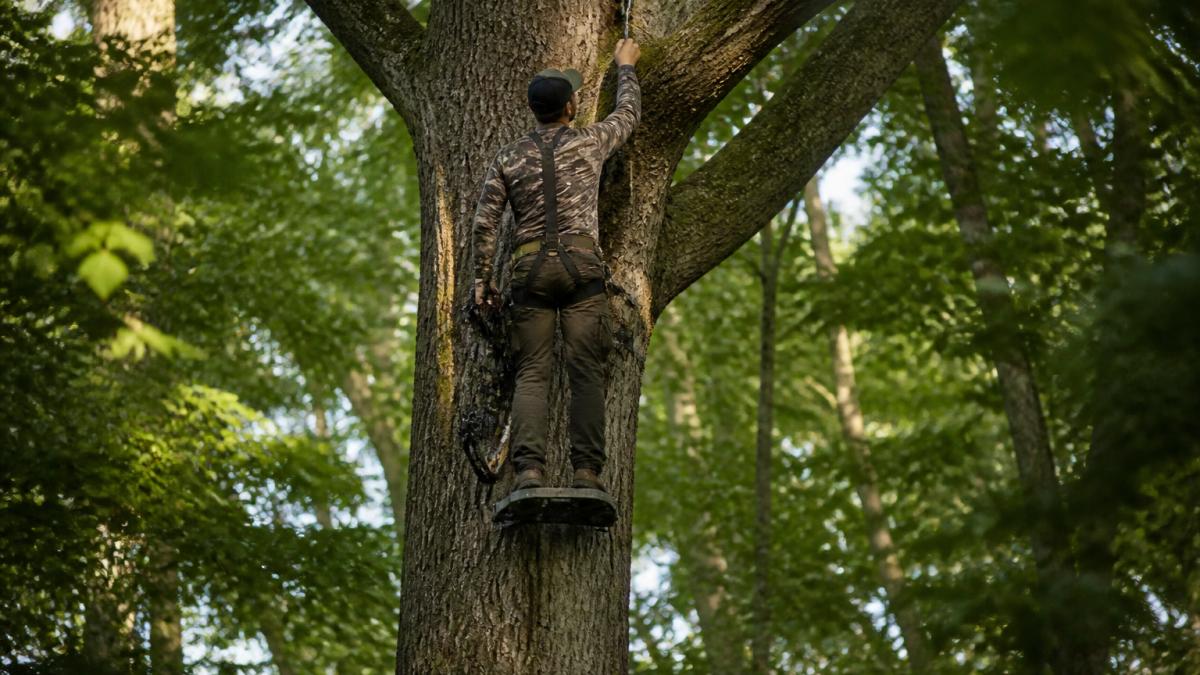
Step 1: Select Your Tree and Assess Branch Structure
Not every tree is suitable. Start with one 12-18 inches in diameter, relatively straight, with a clear view of expected game movement.
Inspect the platform branch: it should be relatively horizontal, at least 6 inches in diameter, and free of dead wood. Dead branches snap unexpectedly, a real hazard when you're suspended beneath one.
Identify your tether anchor point, typically a sturdy branch 2-4 feet above your platform, positioned so your tether creates a slight angle rather than hanging vertical.
Step 2: Install Your Climbing Aid and Ascend Safely
Install your first climbing stick at a height you can reach comfortably from the ground, typically 5-7 feet.
Space sticks 12-18 inches apart vertically, too wide strains your reach, too close wastes weight and effort. Test each with your full weight before moving upward; a stick that feels unstable now will feel worse at 20 feet.
Wear a safety harness connected to the tree during the entire climb, rated for your body weight and attached to a climbing rope that ascends with you. Many beginners skip this, a serious mistake.
Step 3: Hang Your Platform and Position Your Saddle
Once at height, secure your platform to the branch with ratchet straps or carabiners. Ensure it's level and won't shift, and test it with your weight while still connected to your harness.
Position your saddle and adjust your suspension. Your bridge should wrap around the tree at a height keeping your upper body centered and upright, too high and you swing forward, too low and you tilt backward.
Step into your saddle carefully, one hand on the tree for balance. Your weight should feel evenly distributed across your hips.
Step 4: Secure Your Tether and Lineman's Rope
Your tether connects your saddle to a higher anchor point, your fall-prevention system. Attach it firmly and verify it's snug before fully committing. Keep slack minimal, typically 6 inches or less; excessive slack defeats its purpose.
Your lineman's rope (safety line) is a backup system, a longer rope you clip into as you move or reposition, preventing you from swinging away from the tree if you slip.
Organize gear within arm's reach: bow on its hanger, extra rope and lineman's backup secured so nothing falls.
Saddle Hunting Safety Gear and Fall Prevention
Fall prevention is non-negotiable. Your safety harness, tether, and lineman's rope form a redundant system. If one component fails, the others catch you.
Your harness should be rated for at least 300 pounds and made from climbing-grade material. Inspect it regularly for fraying, cuts, or damage.
Practice your emergency descent before season. If you become incapacitated or injured in the tree, can you safely get down?
Saddle Platform Caddy for Saddle Hunting →
Saddle Fit and Sizing for Different Body Types
Saddle fit directly impacts comfort, safety, and hunting success. A well-fitting saddle feels almost invisible; a poor fit becomes torture after a few hours.
Adjust your saddle during pre-season practice: tighten straps, modify bridge height, and find the sweet spot where you feel stable and comfortable. Rushing these adjustments leads to an uncomfortable hunt and unnecessary doubt.
Beginner Budget and Tiered Kit Options
A complete saddle hunting setup for beginners in 2026 requires investment, but it's scalable, start lean and add accessories as you develop skill and identify gaps.
Entry-Level Kit ($400-600): Saddle, platform, tether, six climbing sticks, harness, lineman's rope, and basic carabiners. Functional but minimal, no redundancy and limited gear organization. Suitable for testing whether saddle hunting is right for you.
Mid-Range Kit ($800-1,200): Entry-level components plus a quality bow hanger, rope organization accessories, and backup safety equipment. The Saddle Platform Caddy ($16.00) and Saddle Bridge and Rope Caddy ($6.00) from 3D Hunting Solutions add organization and safety without major expense.

All three are functional, your choice depends on budget and how serious you are about saddle hunting long-term.
Saddle Hunting Practice Tips Before Season
Practice before season separates hunters who execute well from those who struggle. Your first hunt should not be your first time in a saddle in the tree.
Practice Drills in Your Backyard
Set up your saddle in a backyard tree at a safe height (8-12 feet). Practice your ascent and descent multiple times: install sticks, climb, position your saddle, and get comfortable with the movement.
Practice drawing your bow from the saddle. Can you reach full draw without hitting the tree or losing balance? Can you pivot to different angles?
Practice your descent: unclip your tether, secure your lineman's rope, and carefully lower yourself using climbing sticks. It should feel controlled and deliberate, not rushed or panicked.
Common Beginner Mistakes and How to Avoid Them
Mistake 1: Climbing too high. Many beginners aim for 25-30 feet, thinking more height equals better concealment.
Mistake 3: Loose or inadequate tether. Your tether is your fall-prevention system, if it's loose or inadequate (thin rope, poor attachment), it fails.
Mistake 4: Poor tree selection. Choosing a tree because it's convenient rather than for good sight lines and game movement leads to frustration.
Mistake 5: Skipping the safety harness during practice. You're in the tree, confident, just practicing, then you slip.
Gear Compatibility and Integration for Your First Hunt
Your saddle hunting setup for beginners must work as a system. Incompatible gear creates frustration and safety gaps.
Verify your tether attaches securely to your saddle.
Your platform should fit your tree diameter.
Your climbing sticks should be compatible with your saddle's weight and suspension system.
Your bow hanger should accommodate your bow's riser diameter and weight. The Amsteel Bow Hanger ($14.00) works with most bows, but verify before purchasing, a hanger too loose or too tight creates problems when you need to draw or stow quickly.

Rope sizes matter. Your lineman's rope, tether, and bridge should be compatible with your carabiners and attachment points.
Your saddle hunting setup for beginners in 2026 is achievable with intentional practice and quality gear.
3D Hunting Solutions is built for hunters like you.
Frequently Asked Questions
What gear do you need for a beginner saddle hunting setup?
A basic saddle hunting setup requires a hunting saddle, platform, tether, lineman's rope, climbing aid (sticks or rope), bow hanger, and backpack. The saddle is your primary support; the platform holds your feet; the tether and lineman's rope keep you tethered to the tree for safety. A bow hanger organizes your bow, and climbing aids get you up the tree safely. Accessories like rope keepers and platform caddies improve gear organization during climbs and tree setup.
How much does a beginner saddle hunting setup cost?
Accessories like the Saddle Platform Caddy ($16), Amsteel Bow Hanger ($14), and gear hoists ($13 each) add functionality without breaking the bank. Many hunters start with core gear and add accessories over time.
How do you practice saddle hunting safely before the season?
Start in your backyard or a controlled setting with short climbs on familiar trees. Practice hanging your platform, securing your tether, and moving in the saddle at low heights before attempting real hunts. Use a safety line every time. Practice drawing your bow from the saddle and moving quietly. Climb during daylight, assess your comfort level, and identify any gear adjustments needed. Spend at least 3-5 practice sessions before opening day to build confidence and muscle memory.
What makes saddle hunting different from using a hang-on treestand?
Saddle hunting is mobile and packable; you carry your entire setup in a backpack and climb with your gear. Hang-on treestands are heavier, require two trips up the tree, and stay in one location. Saddles offer freedom to hunt multiple trees in a day, adapt to different terrain, and reduce weight on your back compared to traditional stands. Saddles also keep you closer to the tree trunk for better concealment and shooting angles.
Do beginners need a lineman's belt and a tether for saddle hunting?
Yes. A lineman's belt distributes your weight across your hips and waist, improving comfort during long sits. A tether connects you to the tree for fall prevention and safety. Both are essential for safe saddle hunting. The tether attaches to a secure anchor point on the tree; the lineman's belt works with your saddle to keep you stable. Never saddle hunt without both components in place.
How do I know if my saddle hunting gear will work on different tree sizes and shapes?
Most quality saddles and platforms are designed to work on trees ranging from 8 to 24 inches in diameter. Check your platform and saddle manufacturer specifications for diameter limits. Climbing aids like sticks work on varied branch structures. Tether attachment points should be flexible enough to accommodate irregular branch angles. Test your setup on multiple tree types during practice sessions before season. If you hunt trees outside standard diameter ranges, verify compatibility with your specific gear before purchasing.
What should you look for in a beginner hunting saddle?
Choose a saddle with good weight distribution, adjustable suspension, and a comfortable waist belt. Look for durability in high-wear areas and compatibility with your body size and weight range. The saddle should allow freedom of movement for drawing your bow. Read reviews from hunters with similar body types and hunting styles.
Can you saddle hunt with a climbing stick setup?
Yes. Climbing sticks are one of the most popular climbing aids for saddle hunting. They're lightweight, portable, and work well on trees with branches at varying heights. Sticks allow you to climb at your own pace and adjust your route based on branch structure. They're ideal for beginners because they're intuitive to use and give you control over your ascent. Many saddle hunters prefer sticks over rope climbers for their simplicity and reliability in the field.