
Table of Contents
- Lightweight Saddle Hunting Gear Setup Tips: Start With a Weight Budget
- The Complete Saddle Hunting Gear List by Weight
- Saddle Hunting Pack Setup: Packing and Setup Workflow
- Choosing a Lightweight Saddle Hunting Platform
- Climbing Methods and Climbing Sticks for Mobile Hunts
- Saddle Hunting Bow Hanger and Gear Management in the Tree
- Budget Tiers and Cost vs. Weight Trade-Offs
- Safety Checks and Failure Prevention
- Frequently Asked Questions
Last Updated: October 9, 2026
Lightweight Saddle Hunting Gear Setup Tips: Start With a Weight Budget
Saddle hunting gear is the equipment you carry to hunt from a tree using a tree saddle instead of a traditional treestand. The best lightweight saddle hunting gear setup tips all start in the same place: a weight budget you set before you buy anything. Hunters buy light pieces one at a time, then wonder why the full kit still feels heavy.

Here is the fix. Set a total carry weight first, then make every item earn its place.
Weigh Everything Before You Buy Anything
A kitchen scale costs less than a box of broadheads and settles more arguments than any forum thread. Weigh each item on its own, then weigh the full kit packed and ready. The gap between those two numbers is usually a surprise.
- Saddle and ropes
- Platform or standing surface
- Climbing method and sticks
- Pack, straps, and caddies
- Bow hanger, hoist, and tools
Write each number down. Most hunters find two or three items they never questioned are the heaviest things in the bag.
Where Ounces Actually Add Up
Ounces hide in the small stuff. Hardware, extra straps, a second pouch, a backup release. None of it feels heavy in your hand. All of it adds up on a half-mile walk in the dark.
A common mistake is upgrading the big three and ignoring the accessories. In practice, the little items are where you find the fastest savings.
The Complete Saddle Hunting Gear List by Weight
A complete saddle hunting gear list splits into two groups: core carry and everything else. Core carry is the saddle, platform, and climbing method. Everything else is accessories, tools, and safety items. Sort your list this way and the weight math gets simple.
The angle most gear lists skip: give every item a number and a target total. Weigh your own kit on a kitchen scale, because published weights vary by size, rope diameter, and hardware. The ranges below reflect what mobile hunters commonly report for each category, so you can sanity-check your own numbers rather than trust a vague "lightweight" claim.
| Group | Item | Typical Weight Range | Notes |
|---|---|---|---|
| Core carry | Saddle + bridge + lineman belt | 2-4 lb | Rope and webbing choices drive the spread |
| Core carry | Platform (or ring of steps) | 2-5 lb | Packed size matters as much as weight |
| Core carry | Climbing method (3-4 sticks) | 4-8 lb | One-stick and rope systems change this line |
| Accessories | Pack + straps + caddies | 1.5-3 lb | Molle caddies replace loose straps |
| Accessories | Bow hanger, hoist, tools | 0.5-1.5 lb | Small items, easy to trim |
| Safety | Tether, lineman rope, inspection kit | 1-2 lb | Never cut this line |
Setting a Total Pack-Weight Target
Add your core carry first. That number is your floor, you cannot go below it without changing a component. Then add accessories and safety. The sum is your realistic carry weight.
Pick a target you can actually walk a half mile with in the dark, then hold every purchase to it.
Where the Cheap Ounces Hide
Once your core carry is fixed, the fastest savings come from accessories. A second pouch, a backup release, an extra strap, a heavier hoist than you need, none of it feels heavy in your hand, and all of it adds up on the walk in. Trim here before you spend on a new platform.
Core Carry: Saddle, Platform, and Climbing Method
These three items decide your setup more than anything else. Pick them first, because they set the floor for your total weight. A lightweight setup starts here, not with the small parts.
Accessories, Tools, and Safety Items
This is where organization pays off. Gear hangers, rope caddies, and hoists keep your kit tidy and stop tangles. They also weigh almost nothing when you choose the right ones.
Saddle Hunting Pack Setup: Packing and Setup Workflow
A saddle hunting pack setup works best when you pack in the same order every time. Same order means your hands know where everything is, even in low light. That matters more than any single piece of gear.
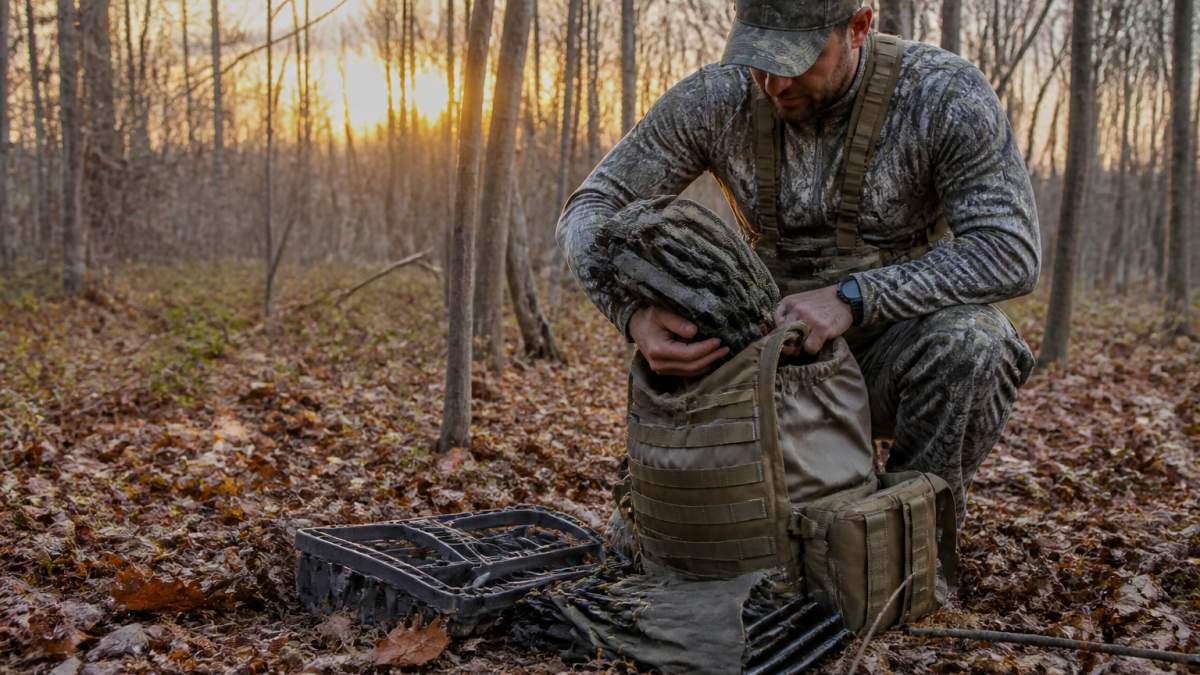
The unique angle here is a repeatable sequence from home to tree to descent, with a target time. Most guides stop at the climb.
Step-by-Step: From Truck to Tree
- At home: Lay out every item on the floor and check it against your weight list. Anything you did not use last hunt stays home.
- Pack order: Heaviest and flattest items against your back, platform and sticks. Ropes and caddies on the outside where you can reach them without unpacking.
- Clip the platform caddy to your saddle or pack molle loops so the platform rides tight and does not swing.
- Attach climbing sticks in the orientation you climb with, so you are not flipping them at the base of the tree.
- Stow ropes and your bridge in a caddy so nothing dangles or snags brush on the walk in.
- Put the pack on and test the fit before you walk. Adjust straps now, not in the dark.
- At the tree: Hang your bow and gear strap first, before you leave the ground.
- Climb, set the platform, then settle in and adjust your tether and bridge.
- On the way down: Reverse the order. Gear comes off the tree before you descend, and ropes go back in the caddy before you walk out.
Expected result: a quiet, repeatable setup with nothing loose and nothing missing. The real win is fewer dropped items and less noise.
Why Packing Order Beats Packing Light
A light pack that is packed wrong is slower than a heavier pack packed right. If your platform is buried under your layers, you dig at the base of the tree in the dark. If your ropes are loose, they snag. Pack for access, then trim weight.
Saddle Bridge and Rope Caddy - Molle →
Gear Organization for Quick Access
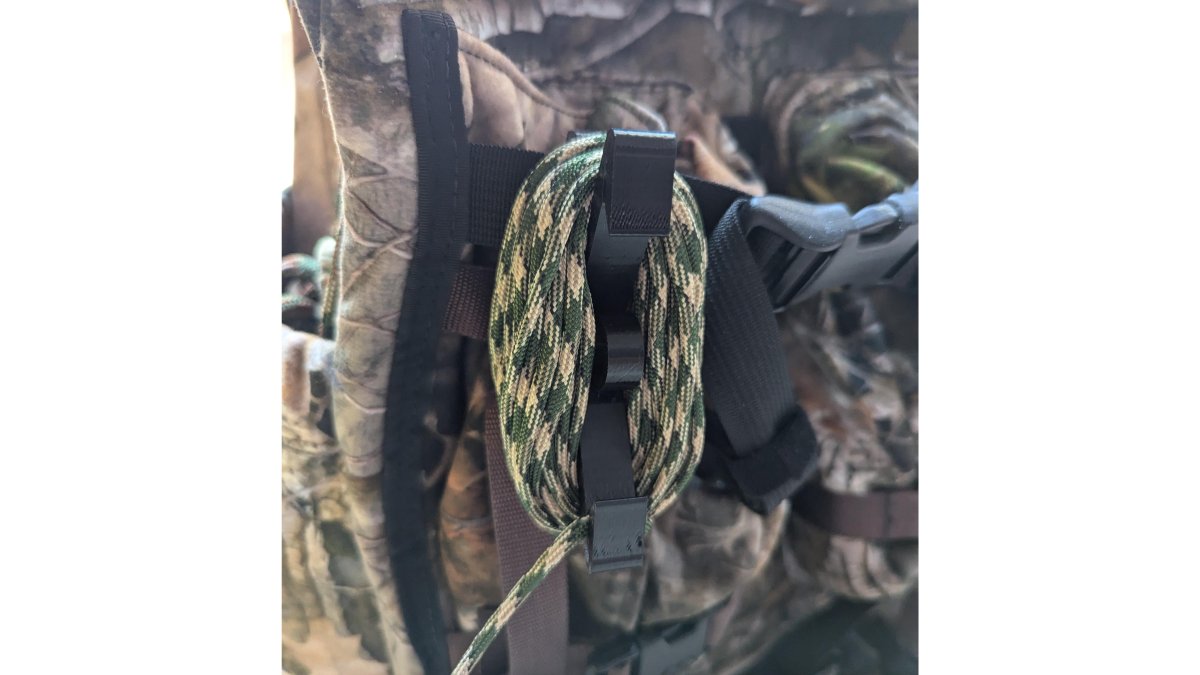
Quick access comes from molle loops and a fixed spot for every tool. If you have to dig, you packed wrong. Our Saddle Bridge and Rope Caddy - Molle holds your bridge or extra rope so it stays out of the way while walking and climbing. It fits 8mm to 11mm ropes and comes in several belt and molle sizes.

Choosing a Lightweight Saddle Hunting Platform
A lightweight saddle hunting platform is your standing surface, so comfort and stability beat raw weight every time. The lightest platform you cannot stand on for three hours is not light. It is just small.
Look at three things: packed size, how fast it sets, and how it carries on your saddle. A platform caddy lets you strap the platform to your saddle or pack instead of your hands. Our Saddle Platform Caddy for Saddle Hunting is built for this, with a PETG body and a stainless steel screw, sized to your platform make and model.
Climbing Methods and Climbing Sticks for Mobile Hunts
Climbing methods for mobile hunts come down to three choices: climbing sticks, a one-stick method, or a rope and preset system. Sticks are the most common because they pack flat and set fast. Presets win on private land where you can leave gear in place.
Public land changes the math. You carry everything in and out, so packability matters as much as weight. A climbing stick caddy keeps sticks tight to your saddle or pack instead of rattling loose. Our Climbing Stick Molle Caddy for 1" Square Tubing fits 1-inch square tube sticks and comes in vertical or horizontal orientation.

Saddle Hunting Bow Hanger and Gear Management in the Tree
A saddle hunting bow hanger keeps your bow within reach without holding it for hours. The best spot is where your hand falls naturally when you stand and turn. Test it at ground level before you trust it at height.
Gear management in the tree follows one rule: everything has a home. Bow on the hanger, pack on a strap, rope in a caddy. A gear hoist handles the climb. Our Multi Spool Gear Hoist for Saddle Hunting holds up to 20 feet of paracord and attaches to a saddle, pack, or molle loop. Rope is not included.
Budget Tiers and Cost vs. Weight Trade-Offs
Cost versus weight is the real decision in every gear purchase. You can spend a lot to save a little, or spend a little to save a lot. The smart move is finding the cheap ounces first.
- Entry tier: Keep your current core gear. Add small caddies and a hoist to fix organization before you spend big.
- Mid tier: Upgrade one core item, usually the platform, and keep the rest.
- Top tier: Replace all three core items, then trim accessories to match.
Fix the tangles and the digging first.
Safety Checks and Failure Prevention
Safety checks and failure prevention belong in every hunt, not just opening day. A five-minute inspection catches the problems that cost seasons. Do it before you leave the truck.
- Check every rope for cuts, glazing, or flat spots
- Inspect straps, buckles, and stitching
- Confirm every screw and connection is tight
- Test your caddy and hanger loads at ground level
- Replace anything that looks worn, no debate
Frequently Asked Questions
What gear do you need for saddle hunting?
A complete saddle hunting gear list covers four categories: the saddle itself with a lineman's belt and tether, a platform or standing surface, a climbing method such as climbing sticks, and your pack plus accessories. Add a bow hanger or gear hanger, a gear hoist for pulling up your bow, and safety items like a full-body harness rated for the climb. Weigh each piece before buying so you know exactly what your mobile hunting setup totals on your back.
How do you make a saddle hunting setup lighter?
Start by weighing every component and setting a total weight budget before you buy. Swap bulky hardware for purpose-built caddies that attach to molle loops, such as a climbing stick caddy or platform caddy, so you carry less loose gear. Choose a lightweight saddle hunting platform over a heavier hang-on, trim your pack to essentials, and use a compact gear hoist instead of a bulky rope system. Ounces removed from five items beat one expensive upgrade.
How do you organize saddle hunting gear for a mobile hunt?
Build your saddle hunting pack setup around a repeatable packing order so every item has one home. Put climbing sticks and platform on the outside of the pack using molle caddies for quick access, keep ropes and your bridge secured with a rope caddy so they do not snag in brush, and stage your bow hanger and gear hoist in the same pocket every time. A fixed packing workflow means you can set up in low light without searching.
What safety gear is essential for saddle hunting?
At minimum, carry a lineman's belt and tether rated for your body weight, inspect all ropes, carabiners, and stitching before every hunt, and replace anything showing wear. Check tree health before climbing, avoid dead limbs, and confirm your platform and climbing sticks are seated and stable before you weight them. Never use a non-weight-bearing accessory, such as a rope caddy, to hold body weight. Practice every step at ground level before your first live climb.
Lightweight saddle hunting comes down to discipline, not spending. Weigh everything, set a budget, and let the small accessories do the heavy lifting on organization. 3D Hunting Solutions designs and 3D prints purpose-built accessories in-house, from rope caddies to platform and stick caddies, so your setup stays tight and quiet in the field. Shop now and build a kit that carries easy and sets up fast.