

Table of Contents
- Best Lightweight Gear for Backcountry Hunting: What Matters Most
- Quick Comparison: Pack Weight and Load Capacity
- Complete Backcountry Hunting Gear Checklist
- Pack Rat: Platform and Stick Carrier for Mobile Hunts
- Tree Hugger: Best Daypack for Hunting Organization
- Multiday Backpack Hunting Gear List: Essentials and Accessories
- Backpacking Hunting Pack Weight: Base Weight vs. Total Load
- How We Evaluated Lightweight Hunting Gear
- Frequently Asked Questions
Last Updated: October 11, 2026
Best Lightweight Gear for Backcountry Hunting: What Matters Most
Backcountry hunting demands a different approach than sitting in a fixed treestand. When you're covering miles on foot, climbing into trees with your gear, and potentially hauling game back out, every ounce matters. The best lightweight gear for backcountry hunting balances weight savings with durability and functionality.
Weight obsession can backfire. A frameless pack saves two pounds but leaves your back sore after day three. A ultralight sleeping bag rated for 20 degrees won't keep you warm at 10,000 feet in October. The real skill is matching gear weight to your specific hunt: terrain, season, duration, and whether you're spot-and-stalk hunting or saddle hunting from trees.
This guide breaks down the essential categories and shows you how to build a lightweight setup that won't fail when it matters. Below, we'll cover the gear that separates experienced backcountry hunters from those struggling under oversized loads.
Quick Comparison: Pack Weight and Load Capacity
Before diving into specific gear, here's how weight breaks down across different hunt scenarios. Base weight is what you carry empty; total weight includes food, water, and ammunition for the trip.
| Hunt Type | Base Weight Target | Total Weight (5-day) | Key Trade-off |
|---|---|---|---|
| Spot-and-stalk, 3 days | 18-22 lbs | 35-40 lbs | Minimal shelter, ultralight sleep system |
| Saddle hunting, 5 days | 20-25 lbs | 42-48 lbs | Modular pack system, integrated knee pad |
| Backcountry rifle, 7+ days | 25-30 lbs | 55-65 lbs | Durability and capacity over ultralight |
| Early season archery, 4 days | 16-20 lbs | 32-38 lbs | Minimal insulation, focus on mobility |
The weight you choose depends on how far you're hiking and whether you're hauling game back. A three-day spot-and-stalk hunt in September allows aggressive weight cutting. A seven-day backcountry expedition in November requires gear that won't fail.
Complete Backcountry Hunting Gear Checklist
A complete backcountry hunting setup includes shelter, sleep system, clothing layers, cooking, water treatment, and game management tools. Most hunters carry more than they need because they haven't tested their actual minimum.
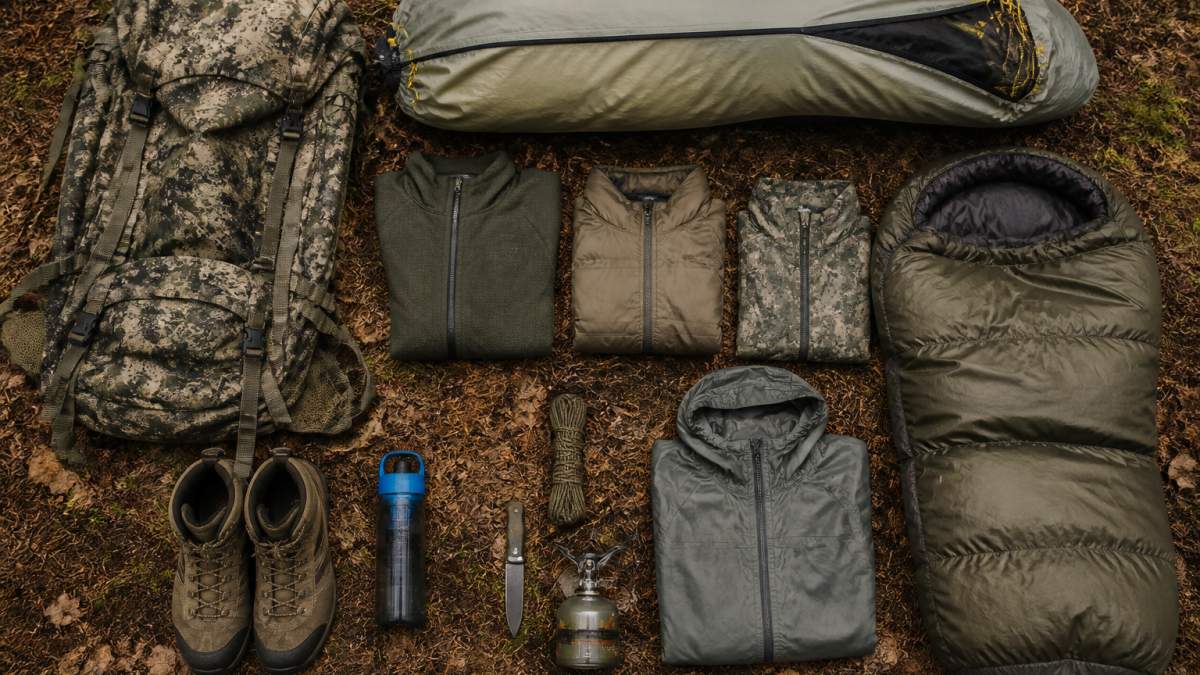
Start with these core categories:
Shelter and Sleep System (combined 4-6 lbs) A quality ultralight tent or bivy weighs 1.5-2.5 pounds. Pair it with a lightweight sleeping bag rated 10-15 degrees below your expected low temperature. A foam sleeping pad adds insulation and weighs under one pound. Skip the ultralight pad if you're hunting in cold months, ground cold will ruin your sleep and your hunt.
Clothing and Insulation (3-5 lbs) Wear moisture-wicking base layers, add a mid-layer fleece or down jacket, and bring a waterproof shell. Avoid cotton completely.
Backpack and Load Carrying (2-3 lbs) A frameless pack works if you're under 25 pounds total. For saddle hunters, a dedicated platform carrier like the Pack Rat eliminates the need for a traditional backpack on the hike in.

Cooking and Water (1-2 lbs) A lightweight stove, small pot, and fuel canister weigh under one pound. A water filter or tablets add ounces, not pounds.
Game Hauling and Field Dressing (1-2 lbs) A fixed-blade knife, game bags, and paracord weigh almost nothing. For larger game, compact drag cuffs like the Big Buck Cuffs replace heavy harnesses and fit in your pocket.
Pack Rat: Platform and Stick Carrier for Mobile Hunts
The Pack Rat solves a problem that generic backpacks ignore: how do you carry a hunting platform and climbing sticks without them catching branches, tangling, or throwing off your balance on the hike in?
The Pack Rat ($139.99) is a purpose-built platform carrier with an integrated knee pad.
Weight runs 2.1 pounds for the standard version, 2.6 pounds for the XL. The 600D waterproof polyester handles rain and brush. Heavy-duty stealth buckles stay quiet in the field.
What works: The MOLLE loops throughout let you attach additional gear. If you're running a modular saddle hunting system, the Pack Rat integrates seamlessly with the Tree Hugger daypack.

Where it falls short: It's purpose-built for saddle hunting. Spot-and-stalk hunters won't get value from the platform carrier design. If you're hiking long distances with a traditional backpack, the Pack Rat adds weight you don't need.
Tree Hugger: Best Daypack for Hunting Organization
Once you're in position, you need quick access to your essential gear without digging through a main pack.
The Tree Hugger opens to 27" (when open) and is 14" (closed) tall, giving you organized access to multiple pockets and pouches. Closed, it's compact at 14 inches, easy to pack or carry as a standalone daypack.
The waterproof polyester material handles early-season rain and late-season snow. Heavy-duty zipper pockets with rope pulls stay quiet when you're accessing gear. The 20-ounce drink pocket keeps water accessible.
What works: The modular design pairs perfectly with the Pack Rat. Carry the Pack Rat on your hike in, then strap the Tree Hugger directly to the tree once you're positioned.
What doesn't: Standalone, it's smaller than a full backpack. You're limited to essential gear, snacks, calls, rangefinder, extra ammunition. For longer sits, you'll want the Pack Rat system for additional capacity.
Multiday Backpack Hunting Gear List: Essentials and Accessories
Building a multiday backcountry hunting load requires discipline. Every item must earn its weight by serving a clear purpose or providing genuine safety backup.
Core Essentials (non-negotiable)
- Backpack with frame (if over 25 lbs total)
- Shelter (tent or bivy)
- Sleeping bag and pad
- Clothing layers (base, mid, shell)
- Headlamp with extra batteries
- First aid kit
- Water filter or treatment
- Stove and fuel
- Food for the duration
- Knife and sharpener
- Paracord (50 feet minimum)
- Map and compass or GPS
Hunting-Specific Gear
- Rifle or bow with ammunition
- Game bags
- Fixed-blade knife for field dressing
- Drag system (cuffs or harness)
- Calls and decoys (if applicable)
- Rangefinder
- Binoculars Refining this essential kit requires balancing durability with physical comfort, a consideration that becomes increasingly vital when evaluating hunting gear for seniors.
Comfort and Redundancy Items
- Extra socks (critical for foot health)
- Insect repellent (Thermacell if mosquitoes are heavy)
- Sunscreen and lip balm
- Repair kit (duct tape, paracord, patches)
- Backup lighter or matches
- Toilet paper and trowel
Game Hauling and Field Dressing
Once you've made your shot, gear weight becomes irrelevant. Your priority shifts to efficient meat care and safe extraction. This is where lightweight gear pays dividends, you're already tired, and a heavy drag system compounds the problem.
The Big Buck Cuffs ($29.99) are a compact wrist-wrap drag system that helps you pull heavy game out of the woods with less strain. Each set features a 28" inch steel cable with industrial grade cuffs and a comfortable wrist strap that transfers weight from your fingers to your arms. Tested to 400 lb pulling strength, they fit in your pocket and are lightweight.

Both systems work through thick brush, steep terrain, and snow without the bulk. They're designed for the reality of backcountry hunting: a lighter system means less exhaustion.
Rope Management and Gear Hoisting
In saddle hunting, you need to haul your bow and gear after climbing. The Multi Spool Gear Hoist ($13.00) holds up to 20ft of paracord with attach points for saddle, pack or molle loop. The Multi Spool Rope Keeper ($13.00) keeps your tether or lineman's rope contained. Works best with 8mm or 9mm tether/lineman ropes.
These 3D-printed accessories help keep your rope system compact and accessible. For hunters running a modular saddle system, they integrate with the Pack Rat and Tree Hugger.
Pest Control and Comfort
Early-season hunts mean mosquitoes. Late-season hunts mean cold nights. Small gear choices prevent misery.
The Thermacell Caddy ($13.00) can hook on any strap or molle loop on the tree, pack, or saddle. It holds a Thermacell unit steady and accessible. For saddle hunters who get hammered by bugs in September, this $13 addition helps prevent distraction.
Aider Gear Cinchers ($7.50) keep your gear exactly where you want it with a simple pull-tab mechanism over a ball mechanism. They're lightweight solutions for hunters who need reliability without the fuss.
Backpacking Hunting Pack Weight: Base Weight vs. Total Load
Understanding the difference between base weight and total weight prevents unrealistic expectations and poor decisions.
Base weight is your pack and gear without consumables. For a backcountry hunter, this typically runs 18-30 pounds depending on season and terrain. A three-day early-season hunt might hit 20 pounds base weight. A seven-day November hunt in high country might run 28 pounds.
Total weight includes food, water, and ammunition. A 20-pound base weight becomes 35-40 pounds when you add five days of food, water capacity, and rifle ammunition. That's the actual load you're carrying. Most hunters underestimate total weight because they focus only on gear.
The weight-saving priority shifts based on duration and conditions. For a three-day hunt, aggressive ultralight choices make sense. For a seven-day expedition, durability and redundancy matter more than shaving ounces. A sleeping bag that's two pounds heavier but rated 10 degrees lower prevents hypothermia risk, that's a worthwhile trade.
How We Evaluated Lightweight Hunting Gear
At 3D Hunting Solutions, we evaluate gear based on field performance. Every product we recommend has been tested in actual hunting conditions.
Our evaluation criteria:
Weight vs. Function, Does the gear do what it claims at the stated weight? A pack rated at 2 pounds that actually weighs 2.3 pounds is misleading. We verify scale weights and functional capacity.
Durability Under Use, Lightweight materials sometimes fail when stressed. We test gear during actual hunts, not just lab conditions.
Integration and Modularity, The best lightweight systems work together. Standalone ultralight gear often forces compromises elsewhere.
Real-World Conditions, Early-season hunts differ from late-season expeditions. We test across seasons and elevations. A sleeping bag that works great in September might be inadequate in November.
Honest Trade-offs, No gear is perfect. We identify what each option sacrifices for weight savings. A frameless pack is lighter but less comfortable over 40 pounds.
Our recommendations focus on proven performers that have earned their place through consistent field testing.
Building a lightweight backcountry hunting setup takes intentional choices and honest assessment of your actual needs.
Frequently Asked Questions
What is the best lightweight gear for backcountry hunting?
The best lightweight gear for backcountry hunting combines modular pack systems with ultralight accessories. The Pack Rat ($139.99) handles platform and stick transport at 2.1 lbs, while the Tree Hugger ($79.99) organizes essentials in the tree at under 2 lbs. Pair these with compact items like Gear Cinchers ($7.50) and the Multi Spool Gear Hoist ($13.00) to keep total base weight manageable. Focus on waterproof, durable materials and molle compatibility for flexibility across multi-day trips.
How much should a pack weigh for backcountry hunting?
Base weight (gear without consumables) typically runs 18-30 pounds depending on season and terrain. The Pack Rat at 2.1 lbs plus Tree Hugger at 1 lb 13 oz gives you 4 lbs of pack capacity alone. Total pack weight depends on hunt duration: a 3-day trip typically runs 30-40 lbs loaded, while 5-day expeditions reach 40-50 lbs. Prioritize ultralight shelter, sleeping system, and clothing layers to offset heavier items like ammunition and food.
What should be on a multiday backpack hunting gear list?
A multiday backpack hunting gear list includes: shelter and sleeping system, insulation and rain layers, boots, cooking setup, water treatment, navigation tools, first aid, repair kit, and hunting-specific items like game bags and drag system. The Pack Rat carries your platform and climbing sticks, while the Tree Hugger keeps frequently accessed gear organized. Add the Big Buck Cuffs ($29.99) for game hauling and the Multi Spool Gear Hoist ($13.00) for hoisting gear in camp. Include redundancy, backup lighter, paracord, and repair supplies, for safety on multi-day expeditions.
What is the best daypack for hunting?
The best daypack for hunting balances quick access, quiet movement, and compact storage. The Tree Hugger ($79.99) is purpose-built for this role, offering waterproof polyester, heavy-duty zippers with rope pulls, molle loops, and smooth nylon linings for silent gear retrieval. At 1 lb 13 oz, it provides dedicated pockets for rangefinder, flashlight, and drink. The Tree Hugger Mini ($79.99) offers the same features scaled down for lighter loads or smaller hunters.