
Last Updated: October 22, 2026
Quick Summary
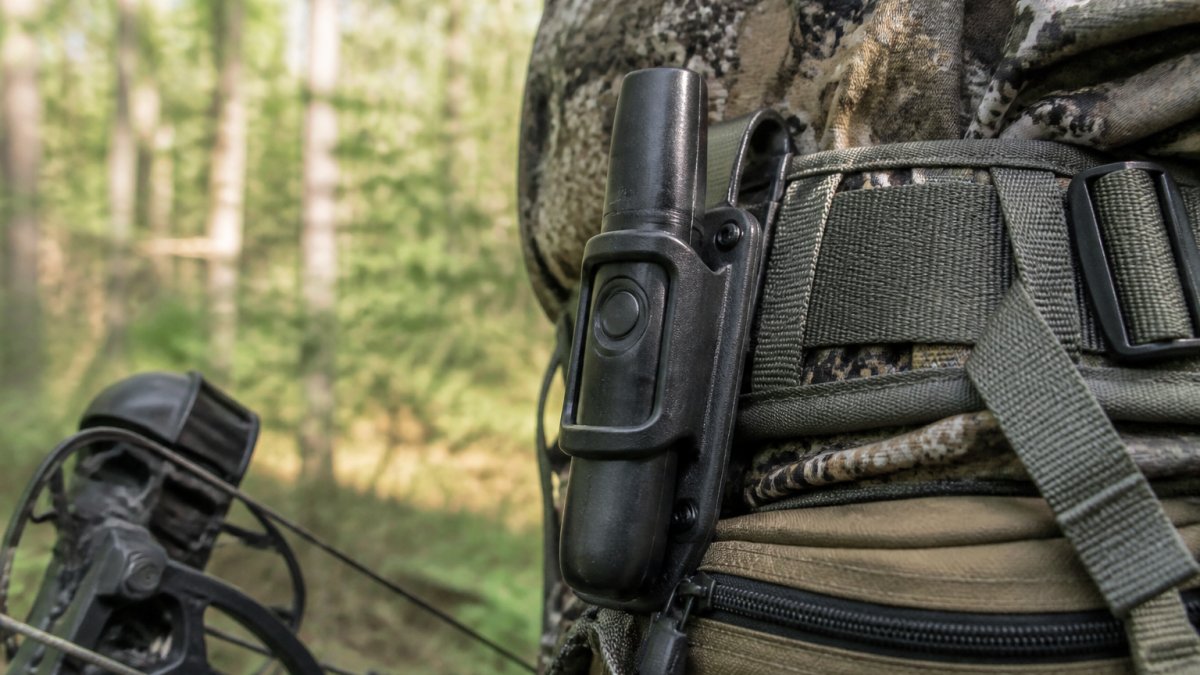
A uv button holster is a purpose-built carrier that keeps a thumb-button release attached to your bow, pack, or saddle instead of buried in a pocket. Our holsters grip the release body itself, fit Ultraview (UV), Scott, Carter, and Stan thumb releases, and all four models cost $17.00.
- Thumb-release holsters are built around compact button-release bodies; wrist-strap releases need a separate universal-fit holster.
- The stabilizer holster for thumb releases is the default pick for most hunters and threads onto the stabilizer's end.
- The Bridge Lock model slides into any open slot and works for right- and left-handed shooters without modification.
- Every holster includes the printed body, mounting hardware, a bungee cord, and a TPU retention knob.
- Test retention by shaking the bow hard and tipping it upside down; if the release shifts, pull more bungee through the knob.
Table of Contents
- What a UV Button Holster Does for Your Setup
- UV Button Holster Fit: Matching Your Release Model
- Side-by-Side: Four Bow Release Holster Options
- Why a 3D-Printed Bow Release Holster Holds Up in the Field
- Mounting Orientation: Horizontal, Vertical, and Bridge Lock
- Retention and Release Security: Testing the Bungee and Knob
- Ambidextrous Use and Access While Hunting
- Pricing, Durability, and What to Check Before You Buy
- Frequently Asked Questions
What a UV Button Holster Does for Your Setup
A UV button holster is a purpose-built carrier that keeps a thumb-button release attached to your bow, pack, or saddle instead of buried in a pocket.
A release clipped to a wrist strap or dropped in a cargo pocket moves around during a climb, so by the time a deer steps into range you are patting down layers instead of settling the pin.
Below, we break down how fit, mounting, and retention work in the field, and how to choose between the four holster styles we build.
UV Button Holster Fit: Matching Your Release Model
Fit is the whole ballgame: too loose and the release rattles, too tight and it fights you on the draw. Thumb-button releases share a broadly similar body shape, so a well-designed holster covers most of them, but "most" is not "all," and that is where ordering mistakes happen.

Our stabilizer-mounted holsters list compatibility with Ultraview (UV), Scott, Carter, and Stan release bodies, the majority of thumb releases hunters carry today. The holster grips the release body itself, not the wrist strap, so fit stays consistent across brands.

Verified Compatibility by Release Model and Generation
Most product listings stop at a brand name, which is not enough when a release has been through two or three generations with different body profiles. The chart below is the compatibility reference we use when buyers ask.
| Release Family | Common Models | Generation Notes | Fits Standard Holster | Custom Fit Recommended |
|---|---|---|---|---|
| Ultraview (UV) | Button-release bodies | Current and prior generation share body profile | Yes | No |
| Scott | Thumb-button bodies | Body profile consistent across recent generations | Yes | No |
| Carter | Thumb-button bodies | Fits standard bodies; oversized thumb barrels need check | Yes | If thumb barrel is oversized |
| Stan | Thumb-button bodies | Fits standard bodies; confirm body length | Yes | If body is longer than standard |
| Other brands | Various | Body shape varies widely | Case by case | Yes |
Two things drive fit more than brand: body length and thumb-barrel size. A standard body and barrel drop in at factory tension; an oversized thumb barrel or extended body needs the holster opened up slightly.
If your release has an unusual body shape or an oversized thumb barrel, we can customize the holster to your exact model on request.
Thumb Button vs. Wrist Strap Releases
These are two different animals needing different holsters. Thumb-button releases are compact, index-finger-fired, and sit close to the string. Wrist-strap releases are bulkier, strap to your hand, and hang differently on a bow.
Our thumb-release holsters are built around the compact body of a button release.
The test is simple: if the release fires from a button under your thumb, you need a thumb-release holster.
Side-by-Side: Four Bow Release Holster Options
We build four holsters that solve different problems. All four are $17.00, printed in-house, and built for mobile and saddle hunters.
| Holster | Mounts To | Best For | Material |
|---|---|---|---|
| Stabilizer Holster for Thumb Releases | Stabilizer threaded end | Standard bow setups | TPU |
| Bridge Lock Stabilizer Release Holster | Open Bridge Lock slot | Bridge Lock bows, ambidextrous use | TPU |
| Wrist Release Stabilizer Holster | Stabilizer screw end or Bridge Lock channel | Wrist-strap shooters | TPU |
| Bino / Pack MOLLE Holster | 1-inch MOLLE loop | Pack or saddle carry | PETG with TPU 95A knob |
The stabilizer holster for thumb releases is the default pick for most hunters.

If you shoot a bow with a Bridge Lock system, the Bridge Lock stabilizer release holster slides directly into any open slot.
Wrist-strap shooters should look at the wrist release stabilizer holster.
For hunters who want the release off the bow entirely, the MOLLE holster for thumb releases clips to any 1-inch MOLLE loop on a pack or saddle.
Mounting and Attachment Hardware Compared
Each holster ships with its mounting hardware, a bungee cord, and a TPU retention knob. Stabilizer models use the threaded end of your existing stabilizer; the Bridge Lock model needs an open slot; the MOLLE model weaves through a 1-inch loop.
Why a 3D-Printed Bow Release Holster Holds Up in the Field
A 3D-printed bow release holster holds up because the material does the work.
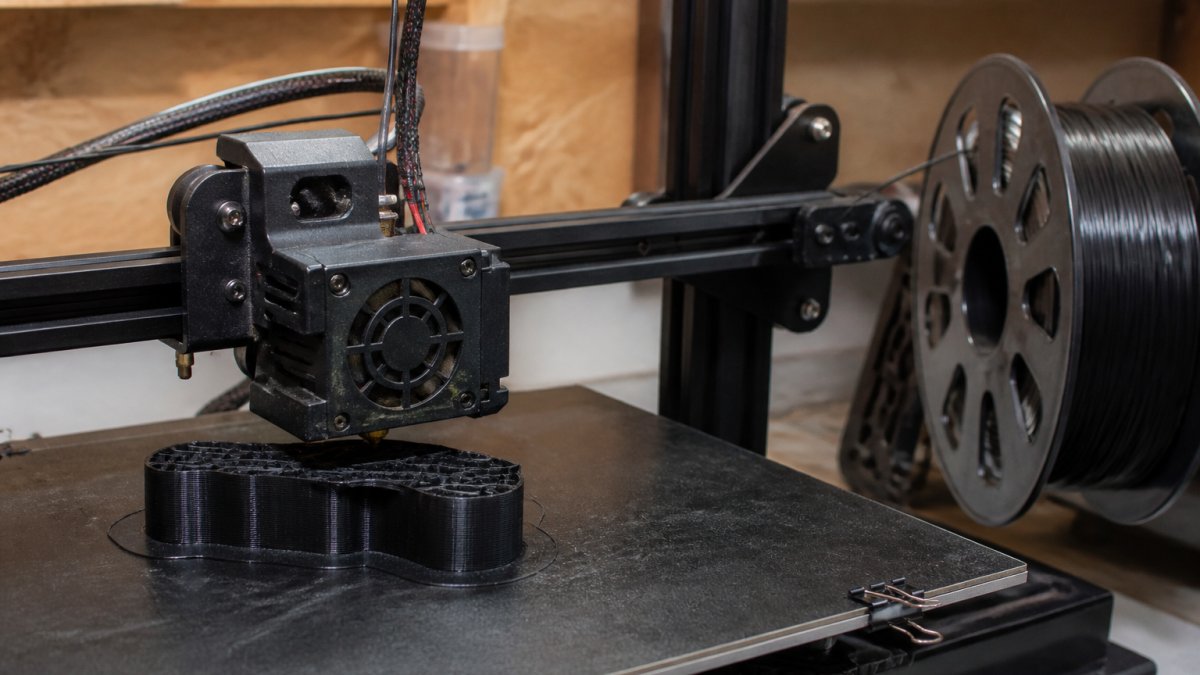
That matters in cold weather: rigid plastics get brittle below freezing and can split on a hard knock against a tree.
The MOLLE model uses PETG for the body to hold shape on a pack, with a TPU 95A knob where grip matters.
Print orientation and wall thickness decide whether a printed part survives a season.
Mounting Orientation: Horizontal, Vertical, and Bridge Lock
Orientation comes down to how you grab the release.
Archery Release Stabilizer Holster for Thumb Releases →
Our stabilizer holsters let you choose orientation at install by rotating the holster on the stabilizer threads before locking it down.
Bridge Lock is a mounting standard, not a holster feature, and it lets the holster sit flush against the riser instead of hanging off the stabilizer's end.
Test your orientation with gloves on before you commit. A setup that feels right bare-handed can be awkward with a heavy glove in November.
Retention and Release Security: Testing the Bungee and Knob
Retention is where cheap holsters fail. A release that pops out on the climb is worse than no holster at all.
The test is simple: load the release, shake the bow hard, tip it upside down, and bounce it against your palm. If it stays put, the tension is right; if it shifts, pull more bungee through the knob.
The knob is TPU so it grips the bungee without slipping and will not shatter against a climbing stick. Check the bungee for fraying each season and replace it if the stretch feels soft.
Ambidextrous Use and Access While Hunting
Left-handed hunters get a raw deal on most gear, so we built for both sides. The Bridge Lock holster works for right- and left-handed shooters without a separate SKU, the wrist-release holster mounts on either side of the bow, and the MOLLE holster works on any loop regardless of draw hand.
Access while hunting is the real test. In a saddle, your bow hangs in front of you and your release needs to be within reach without unclipping anything.
For pack carry, the MOLLE holster keeps the release on your chest rig or hip where your hand naturally falls, a setup many backcountry hunters prefer because it keeps weight off the bow during long hikes.
Practice the grab in your saddle at ground level before you climb. Ten reps in the yard builds the muscle memory that matters at 20 feet.
Pricing, Durability, and What to Check Before You Buy
All four holsters cost $17.00, one-time purchase, no subscription, the same across every model because material cost and print time are close to identical.
What the Price Includes, and What It Does Not
Every holster includes the printed body, mounting hardware for its specific mount type, a bungee cord, and a TPU retention knob, no separate hardware kit and no upsell for the retention system.
The price does not include a stabilizer, a Bridge Lock-equipped bow, or MOLLE webbing, parts you already own.
Compared with replacing a release that fell out of a pocket or a strap that failed on a climb, the price is a small insurance premium.
Durability, Weather Resistance, and Maintenance
Durability comes down to three checks before you buy:
- Confirm your release type: thumb button or wrist strap
- Confirm your mounting point: stabilizer threads, Bridge Lock slot, or MOLLE loop
- Confirm your draw hand, especially if you shoot left-handed
Do those three things and you will order the right holster the first time. Skip them and you will be returning a part that was never going to fit.
On long-term wear, TPU is the reason the holster survives cold-weather use. Rigid plastics get brittle below freezing, and a hard knock against a tree can split them.
Maintenance is a short list:
- Rinse the holster with fresh water after exposure to mud or salt, and let it air dry.
- Inspect the bungee at the start of each season for fraying or soft stretch, and replace it if either appears.
- Check the TPU knob for cracks after hard impacts, and replace it if the bungee no longer anchors under tension.
For hunters who want a full system, the four holsters cover bow-mounted, saddle-mounted, and pack-mounted carry, attaching to hardware you already own: your stabilizer, your Bridge Lock slot, or your MOLLE webbing.
Whether printed gear holds up depends on the print.
Frequently Asked Questions
Which Ultraview release fits a UV button holster?
Fit depends on the release body, not just the brand. Thumb-button models with a compact head and a straight barrel sit best in a UV button holster; bulky or angled heads can bind on the walls. Measure your release body width and depth, then match it to the holster opening. If your model sits loose or tight, ask for a custom print sized to that exact release. A holster that grips the body without rattling is the goal, since a loose fit adds noise on the draw.
How do you attach a holster to a bow?
There are two common methods. The first threads onto the stabilizer's screw end, replacing the stabilizer tip so the holster sits forward of the riser. The second slides into an open Bridge Lock stabilizer slot, which keeps the profile low and works for left- or right-handed shooters. A third option is a MOLLE mount that clips to a 1-inch loop on your pack or saddle. Pick based on where your hand naturally reaches during the draw, then tighten the knob and check for movement before you climb.
Is a 3D-printed release holster durable enough for field use?
It depends on the filament and the design. TPU is flexible and rubber-like, so it grips a release without scratching it and absorbs bumps against a treestand or climbing stick. PETG is stiffer and better suited to a pack-mounted body that takes less direct impact. Neither is indestructible: repeated flexing at a thin wall or long sun exposure will shorten life. Inspect the mounting bolt and bungee each season, and replace the holster if you see cracking at the attachment point.
Can you use a UV button holster with a wrist strap release?
Usually not. Thumb-button holsters are shaped around a compact release body, while a wrist strap release has a folding head and a strap that will not seat in that opening. Wrist releases need a dedicated holster with a wider mouth and a channel for the strap. If you shoot both styles, keep one holster for each rather than forcing a wrist release into a button holster, which can leave the release loose and prone to falling out during a climb.