Table of Contents
- What to Look for When You Shop Custom Bow Hunting Gear Online
- Is a Modular Bow Hanger Worth It for Saddle Hunting?
- The Benefits of 3D Printed Archery Accessories
- Custom Bow Setup Tips for Mobile Hunters
- How to Shop Custom Bow Hunting Gear Online Without Guesswork
- Gear Longevity and Sustainability: Making Your Setup Last
- Frequently Asked Questions
Last Updated: September 11, 2026
What to Look for When You Shop Custom Bow Hunting Gear Online
When you shop custom bow hunting gear online, the two factors that decide whether a purchase works in the field are compatibility and durability. Everything else is marketing.
At 3D Hunting Solutions, we build accessories for mobile and saddle hunters. Gear that fits your exact setup often performs better than gear with the longest feature list.
Below is the configuration workflow we walk customers through before they order, plus the durability questions that separate a part that lasts from one that fails at height.
Step 1: Record Your Bow's Specs Before You Shop
Fit starts with your bow's specifications. Draw length, draw weight, cam style, and riser geometry all determine which accessories will mount cleanly and which will rattle loose after a few sits.
Write these down before you open a single product page:
- Axle-to-axle length, measured tip to tip at the cams, in inches. This tells you how much real estate you have for a hanger, quiver, or rest without crowding the sight window.
- Draw length, in inches, measured at your anchor. This is set by the bow's cam module, not by the accessory, so confirm it before you buy anything that interacts with the string or cables.
- Draw weight, in pounds, at your shooting weight, not the bow's max. A hanger rated for a 70-pound bow may not hold a 60-pound bow with a loaded quiver the same way.
- Riser style, machined, forged, or cast, and whether the riser has a dovetail or bushing mount for your rest and sight.
- Limb type, split or solid. Split-limb bows need a hanger or rest that clears the gap; solid-limb bows do not.
- Gear strap width, most saddle gear straps run up to 1 inch wide. Measure yours with a tape, not by eye.
- Attachment system, MOLLE, HYS, Amsteel, or a plain daisy chain. These are not interchangeable, and a hanger built for one will not lock down on another.
A common mistake is buying an accessory that fits "most bows" and discovering it interferes with your sight or arrow rest. Measure first, then buy.

Step 2: Check the Compatibility Matrix Before Checkout
Compatibility is where most online purchases go wrong, because a product page rarely tells you what it will not fit. Build your own matrix by matching three things:
- Mount type to mount type. If your bow's riser uses a bushing mount and the accessory ships with a dovetail clamp, you need an adapter or a different part. Confirm the thread pitch and screw length, not just the mount style.
- Clearance to clearance. A hanger with a 3.5-inch gap clears most risers and sights, but a closed hook can foul a wrist sling or a fall-away rest cord (hunter-ed.com). Measure the gap you actually have, then compare it to the product's stated gap.
- Load to load. A hanger holds your bow's weight plus the weight of anything hanging off it. If you run a quiver on the bow, add that weight before you trust a printed part.
If a seller cannot provide details on mount type, gap dimension, and load rating, consider other options.
Step 3: Ask How the Product Was Field-Tested
Durability is not a spec sheet number. It is what happens after a part spends a season in freezing temperatures, gets dropped from a tree, and still holds your bow at full draw.
A practical way to judge a product is to ask how it was tested. Gear tested on real hunts, in real weather, can provide valuable insights. This distinction can be more informative than some material claims on a product page.
Step 4: Confirm the Return Terms and Support Window
Custom gear is bought sight-unseen, so the return policy is part of the product. Look for a stated window, a clear condition for returns, and a way to reach a human if a part does not fit. A maker who answers specific fit questions before the sale is likely to provide good support after the sale.
Is a Modular Bow Hanger Worth It for Saddle Hunting?
A modular bow hanger is worth it for saddle hunters who need to reposition their bow as they shift around the tree. The value comes from flexibility: a modular hanger lets you move your bow without re-rigging your entire setup.

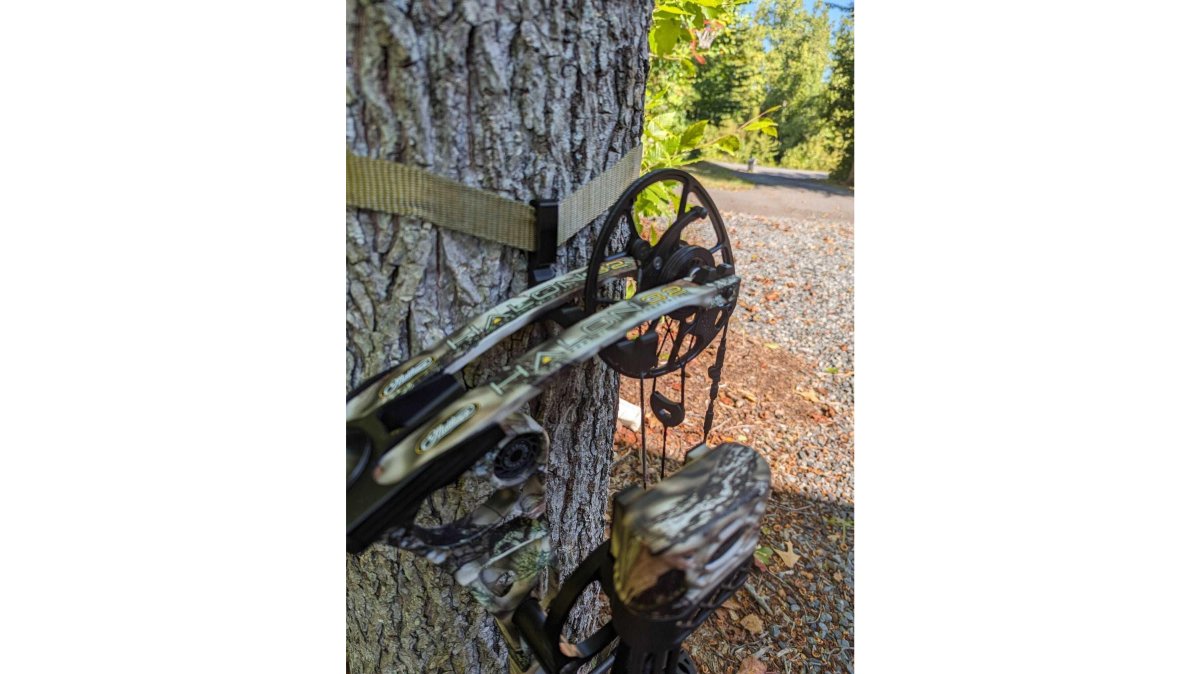
For anyone who has juggled a bow on their lap during a long sit, the appeal is obvious. A hanger keeps your bow accessible and off your body, which reduces movement when a deer appears.
The trade-off is weight and bulk. Modular systems add a small amount of both. For hunters covering miles, that cost is usually worth it. For hunters who sit one stand all season, a simpler fixed hanger may do the job.
3D Hunting Solutions makes this decision easier with options built for both approaches. The Bow Hanger - Gear Strap for Saddle Hunting uses an open design with a 3.5-inch gap and fits gear straps up to 1 inch wide, priced at $14.00. For rope-based setups, the Amsteel Bow Hanger offers the same gap in a rope-mounted version, also $14.00. Hunters who prefer a closed hook can choose the Bow Hanger - Amsteel/Strap, and split-limb shooters get a dedicated option in the Split Limb Bow Hanger at $10.00.

| Hanger Type | Mounting | Price | Best For |
|---|---|---|---|
| Open Gear Strap | MOLLE/HYS/gear strap | $14.00 | Saddle hunters wanting quick access |
| Amsteel | Rope or daisy chain | $14.00 | Rope-based saddle setups |
| Closed Amsteel/Strap | Gear or Amsteel strap | $14.00 | Hunters who want a secured hook |
| Split Limb | Gear strap | $10.00 | Split-limb bow shooters |
The Benefits of 3D Printed Archery Accessories
The main benefit of 3D printed archery accessories is that they can be engineered around a specific problem instead of a general market. A part designed for one job, like holding a bow on a saddle strap, can often perform that job effectively.
Printing also allows rapid iteration. When a design fails in the field, it can be revised and reprinted quickly rather rather than waiting on a factory tooling cycle. This short feedback loop can contribute to purpose-built printed gear fitting well and being lightweight. custom hunting apparel.
Material choice still matters. A part printed in the wrong material will crack under load (nist.gov). Ask what polymer was used and whether the maker tested it under real draw weight.
Custom Bow Setup Tips for Mobile Hunters
A mobile bow setup should be light enough to carry for miles and organized enough to deploy in under a minute. Those two goals pull against each other, so the winning setup is the one that balances them for your terrain.
What some gear pages skip is the configuration workflow itself, how to decide what goes on the bow, what goes on the saddle, and what stays in the truck. Here is a process to consider.
Configure by Hunt Scenario, Not by Gear List
Start with the hunt, not the catalog. A spot-and-stalk mule deer hunt and a 20-foot saddle sit in a hardwood bottom demand different setups, even with the same bow.
- Saddle sit, short walk in: You can carry a little more. Prioritize fast access, hanger, release, rangefinder within reach without turning your head.
- Saddle sit, long walk in: Cut every ounce that does not earn its place. Swap bulky hangers for printed parts, consolidate attachments onto one strap, and leave backups in the truck.
- Spot-and-stalk: The bow stays in your hand, so the hanger is dead weight. Carry a lighter rig and skip the hanger entirely.
- Ground blind: Clearance matters more than weight. Check that your hanger and rest do not foul the blind wall or your draw cycle.
Write your scenario at the top of your gear list. Every item has to justify itself against that scenario or it comes off.
Keep It Light and Packable
Every ounce you add to your rig is an ounce you carry up the tree. Audit your setup each season and remove anything you did not use the previous year.
Weight-saving habits that hold up:
- Swap bulky hangers for printed parts that weigh a fraction as much
- Consolidate attachments so one strap carries multiple items
- Leave backup gear in the truck, not in your pack
- Match strap width to your gear strap, a 1-inch strap in a 1.5-inch channel slides, and a 1.5-inch strap will not thread a 1-inch channel at all
Organize for Fast Deployment
Speed comes from repetition and consistent placement. If your release aid, quiver, and hanger always sit in the same spot, your hands learn the sequence and stop fumbling in the dark.
A practical rule: anything you need within the first 30 seconds of settling in should be reachable without turning your head. That includes your release, your bow hanger, and your rangefinder.
Build the sequence once, then rehearse it in the yard with gloves on. The setup that works in daylight with bare hands may not be the setup that works at 5 a.m. in December.
Match Draw Length and Poundage to the Accessory, Not the Other Way Around
Your draw length and draw weight are set by the bow, and no accessory changes them. What the accessory has to do is survive them.
- A hanger rated for a 70-pound bow at full draw is not the same as one rated for a 60-pound bow with a loaded quiver (peer-reviewed research).
- A rest or sight that mounts cleanly at one draw length may crowd the string at another, because the string path changes with the cam module.
- If you change draw length, re-check clearance on every accessory that sits near the string or cables.
How to Shop Custom Bow Hunting Gear Online Without Guesswork
Shopping for custom bow hunting gear online without guesswork comes down to verifying three things before checkout: exact specifications, real field feedback, and a return policy you understand.
Start with specifications. A seller who lists precise dimensions, materials, and fit ranges demonstrates product knowledge. Vague listings may indicate a lack of detail.
Then look for field evidence. Customer reviews, photos from real hunts, and any footage of the gear in use can provide valuable insights beyond studio product shots.
Finally, confirm the return terms. Reputable makers often stand behind their work, and a clear policy can protect you if a part does not fit your setup.
Message the seller before buying and ask one specific question about your setup. The quality and speed of the answer can indicate the level of support you might receive after the sale.
Gear Longevity and Sustainability: Making Your Setup Last
Gear longevity is the most underrated form of sustainability in hunting. A part that lasts five seasons replaces five parts that fail after one, and that math matters for both your budget and your impact.
Extending the life of your archery supplies comes down to a few habits:
- Inspect straps, ropes, and attachment points before every season
- Store gear dry and out of direct sun to slow material breakdown
- Retire any part that shows cracks, fraying, or deformation, no matter how minor
Custom and printed accessories fit this model well because individual components can be replaced instead of the whole system. When one hanger wears out, you swap the hanger, not the strap, the quiver, and everything attached to them.
That approach also reduces waste. Buying one purpose-built part that lasts can be more effective than buying multiple generic parts that may fail. For hunters who care about both their gear and the places they hunt, longevity is the practical answer.
Frequently Asked Questions
What are the benefits of using 3D printed accessories for bow hunting?
3D printed accessories are made in-house with precise tolerances, so they fit your specific gear without wobble or rattle. They can be built around real hunting scenarios, like fitting a 1-inch gear strap or a 3.5-inch bow hanger gap. They are lightweight and durable enough for backcountry use, and they can be replaced or customized individually instead of buying a whole new system.
How do I ensure custom bow gear is compatible with my specific setup?
Start by checking the attachment points on your saddle, tree stand, or gear strap. Look for accessories that fit standard strap widths, like up to 1 inch, and confirm the hanger gap matches your bow's limb or riser. If you use a mix of brands, measure the mounting area and ask the maker for a compatibility check. Many custom shops offer design services to match your exact configuration.
Are 3D printed bow hunting accessories durable enough for field use?
Yes, when they are printed with the right material and wall thickness. Look for accessories that are tested in real hunting conditions, not just in a workshop. A well-made 3D printed bow hanger or gear hook can handle the weight of a compound bow and the stress of repeated hanging. Check for reinforced designs and avoid thin, brittle prints that snap under load.
What should I look for when buying custom bow hangers for saddle hunting?
Focus on three things: fit, weight, and attachment method. A good hanger fits your gear strap or Amsteel rope without slipping, stays under a few ounces, and holds your bow securely with a gap wide enough for your limb or riser. Modular designs let you swap between a strap and a rope setup, which is useful if you hunt different tree diameters or switch between saddle and tree stand.
Custom bow hunting gear only pays off when every part fits your setup and survives real field conditions. 3D Hunting Solutions designs and 3D prints purpose-built accessories in-house, field-tests them personally, and offers custom design services when an off-the-shelf part will not do. Whether you need a modular bow hanger for saddle hunting or a lightweight upgrade for your mobile rig, you can get started with 3D Hunting Solutions and build a setup that deploys fast and lasts for seasons.