
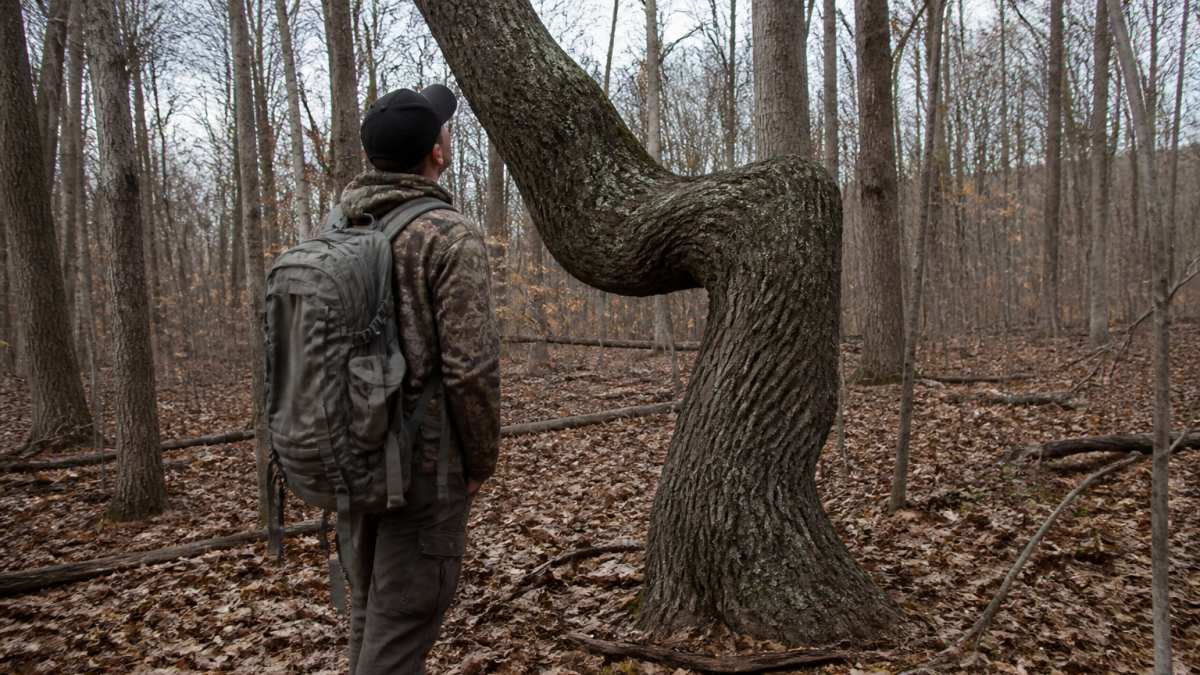
Table of Contents
- Assess Structural Integrity Before You Climb
- Selecting the Right Tree vs. the Right Location
- Mobile Hunting Saddle Setup on Non-Straight Trunks
- Using Climbing Sticks and Platforms on Irregular Trees
- How to Level a Tree Stand on a Lean
- Managing Shooting Lanes and Concealment
- Wind Direction, Entry Routes, and Scent Control
- Legal and Ethical Considerations
- Frequently Asked Questions
Last Updated: September 29, 2026
Assess Structural Integrity Before You Climb
Before you commit to hunt weird trees, spend time inspecting them from the ground. Look for cracks, splits, dead branches, or signs of disease. A tree that looks fine from 20 yards away might be unstable once you're 30 feet up with your full pack weight.
Check the trunk for lean. A slight angle is often manageable. A severe lean changes everything about how you'll set up. Test the tree by pushing hard on the trunk at different heights. It shouldn't move more than a few inches. Dead wood sounds hollow when you tap it. Living wood rings solid.
Pay special attention to the base. Exposed roots, soil erosion, or signs of recent damage mean the tree's foundation is compromised. A tree can look strong at the crown and be unstable at ground level. This is where most failures start.
Look for previous damage. Scars, bark missing, or branches that have been broken and healed tell you this tree has weathered storms. That's useful information. But fresh damage or oozing sap means the tree is actively stressed.
Selecting the Right Tree vs. the Right Location
The best tree isn't always the tallest or straightest. The best tree is the one that puts you in position to hunt effectively while staying safe.
Start by identifying your hunting location first. Where do deer move? Where do they feed? Where are the scrape and rub lines? Once you know where the action happens, find a tree that overlooks that area. A mediocre tree in the right spot beats a perfect tree in the wrong place.
Look for trees with natural cover. You want branches and canopy between you and where the deer will be. This breaks up your silhouette and keeps you hidden. A tree standing alone in the open forces you to build artificial concealment. Trees surrounded by other timber give you cover for free.
Consider tree diameter. Trees between 10 and 18 inches work best for most setups. Smaller trees flex too much under your weight. Larger trees make it harder to position your saddle or platform at the right angle. Weird trees often fall outside this range, which is part of what makes them tricky.
Height matters less than most hunters think. 20 to 25 feet is plenty. Going higher doesn't make you more invisible. It makes it harder to make accurate shots and harder to recover if something goes wrong. Hunt from weird trees at the height that feels stable, not the height that feels high.
Mobile Hunting Saddle Setup on Non-Straight Trunks
A mobile hunting saddle transforms how you can use weird trees. Unlike a hang-on platform or tree stand, a saddle works on trunks that lean, fork, or twist because you're not trying to create a level platform. You're creating a stable attachment point for your body.

Start by positioning your saddle bridge. The bridge connects your saddle to the tree and holds your weight. On a straight trunk, this is simple. On a leaning or forked tree, you need to think about where the bridge actually contacts the wood.
The bridge should sit perpendicular to the trunk, not perpendicular to the ground. This is the key difference. Your bridge will be at an angle. That's correct. The saddle hangs below it and naturally finds a comfortable position for your body.
Use parachord or heavy-duty rope to secure your saddle bridge to the tree. Wrap it around the trunk at least twice. Tie it with a knot that won't slip. Test it hard before you put your full weight on it. Your life depends on this connection.
For non-straight trunks, you may need to adjust where you position the bridge. On a forked tree, you can use the fork itself as a natural anchor point. The bridge sits in the fork, and the rope wraps around both limbs. This distributes your weight across a wider area and feels more stable than a single-trunk setup.
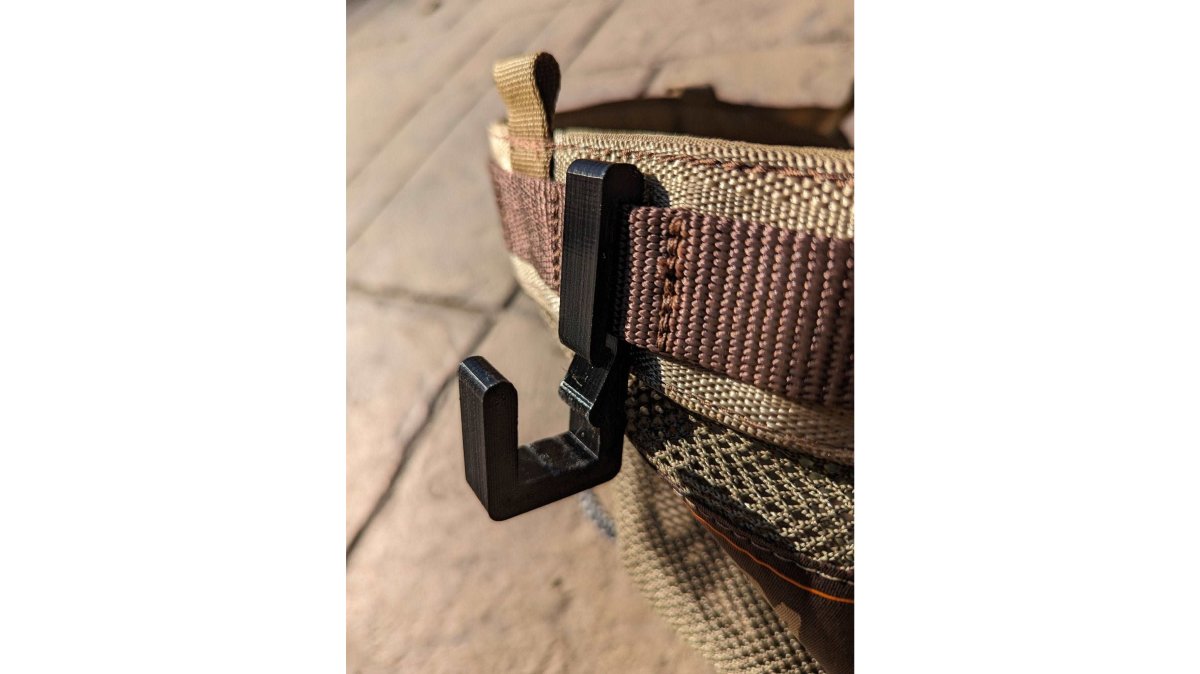
3D Hunting Solutions makes a Saddle Platform Hanger for Mobile Hunting designed specifically for this kind of irregular setup. It attaches your platform to your saddle without requiring perfect trunk geometry.
Using Climbing Sticks and Platforms on Irregular Trees
Climbing sticks are your path up the tree. On a straight trunk, they're straightforward. On a weird tree, they require planning.
Space your climbing sticks based on the trunk shape, not a fixed distance. On a leaning tree, you may need to space them closer together on one side to keep your body aligned with the trunk. On a forked tree, you might use one stick on each side of the fork to climb between the limbs.
Each stick needs solid contact with the wood. On a curved or twisted trunk, this means rotating the stick to find the best angle. Zip ties help lock the stick in place once you've positioned it. Parachord works too, but zip ties are faster and more reliable.
Test each stick before you put your full weight on it. Step on the stick with one foot while holding the stick above. If it holds, move to the next one. If it shifts or feels loose, reposition it and test again.
Platforms add stability at your hunting position. A hang-on platform works on weird trees if you can find a branch or a spot where the trunk widens enough to support it. Some hunters use a traditional platform. Others prefer a climbing stick platform that requires less structural support. These specialized setups keep you mobile in the canopy, though you must remain as diligent about keeping hunting dogs hydrated on the ground below as you are about securing your own footing.
The Saddle Platform Caddy for Saddle Hunting lets you carry your platform while you climb, then deploy it at your setup height. This is especially useful on weird trees where you need to scout the best position before committing to where you'll hunt. You climb with minimal gear, find the right spot, then attach your platform.

How to Level a Tree Stand on a Lean
A leaning tree is one of the most common "weird" situations. The trunk angles, and everything you attach to it angles with it.
First, accept that you won't get perfectly level. Your goal is stable and comfortable, not level. A saddle naturally accommodates a lean because your body weight finds its own balance point. A platform needs more attention.
If you're using a hang-on platform, position it so the lean works with you, not against you. The lean should tilt the platform slightly toward the tree, not away from it. This keeps you pressed against the trunk for stability. A platform that tilts away from the tree feels dangerous and is dangerous.
Use shims under the platform legs to adjust the angle. Flat wood shims work. So do folded parachord or leather strips. The goal is to level the platform enough that you feel stable and your shooting position feels natural.
For a mobile hunting saddle setup on a lean, your bridge does most of the work.
Managing Shooting Lanes and Concealment
Your shooting lanes are the gaps in the branches where you can draw your bow and shoot. On a weird tree, you may have fewer options than on a straight tree surrounded by open space.
Wind Direction, Entry Routes, and Scent Control
Wind is everything. Even the best setup fails if your scent drifts toward the deer.
Legal and Ethical Considerations
Check local hunting regulations before you modify any tree. Some areas restrict cutting branches or altering tree structure. Others allow it. Know your rules.
Frequently Asked Questions
How do you safely attach a tree stand to a leaning tree?
Start by assessing the lean's direction and angle. Use a level to identify the true vertical, then position your saddle or stand perpendicular to the trunk's lean, not perpendicular to the ground. Secure your safety harness tether first, then attach your platform or hang-on stand using full-contact straps at multiple points. Avoid placing weight on the downslope side. Always test your setup with body weight before committing to the hunt. Inspect all attachment points for bark integrity and structural soundness before climbing.
What are the best mobile hunting accessories for irregular tree trunks?
Purpose-built saddle platform hangers and caddies designed for varied tree diameters are essential. The Saddle Platform Caddy for Saddle Hunting ($16) carries your platform during the climb on non-standard trunks, while the Saddle Platform Hanger for Mobile Hunting ($13) secures it once you're positioned. A Saddle Bridge and Rope Caddy ($6) keeps your bridge and extra rope organized and out of the way during climbing.
How do you maintain concealment in trees with sparse branches?
Sparse canopy cover requires strategic positioning and additional concealment tools. Position yourself on the downwind side of the tree where your silhouette is broken by the trunk. Use your saddle's bridge to create an elevated platform that keeps you higher in the remaining branches. Add portable blind material or natural cover (branches, vines) to mask your outline. Wear appropriate camouflage that matches the specific light conditions of that tree. Consider ground blinds or tripod stands as alternatives if the tree offers insufficient overhead cover for safe concealment.
Is it safe to use climbing sticks on trees with heavy knots or burls?
Climbing sticks work on knotty trees, but you must inspect each stick placement carefully. Heavy knots and burls create uneven surfaces that can prevent sticks from seating flush against the trunk. Test each stick's stability before putting your full weight on it. Avoid placing sticks directly on large burls; instead, position them above or below the obstruction where bark contact is solid. Use paracord or zip ties to secure sticks in place on irregular surfaces. If knots prevent proper foot placement, skip that section and space sticks wider apart. Always prioritize safety over speed when ascending difficult trees.