
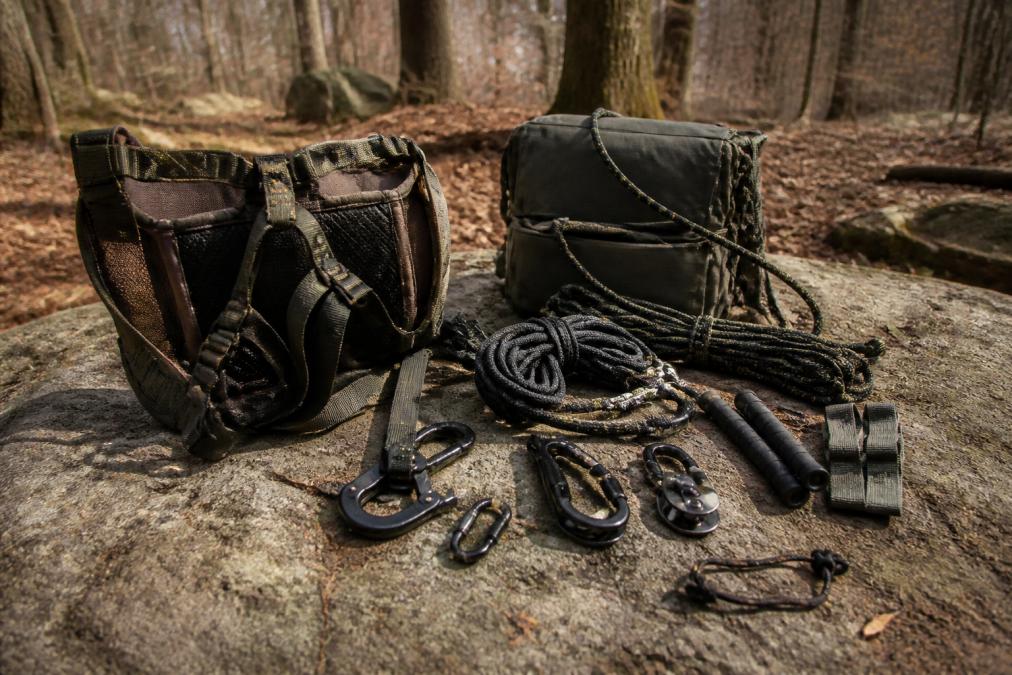
Table of Contents
- Why 2026 Is the Year of the Modular Saddle Setup
- Quick Comparison: Best Saddle Hunting Accessories for 2026
- Saddle Hunting Climbing Sticks: Carrying and Deployment Accessories
- Mobile Hunting Platform Setup: Hangers, Caddies, and Carry Solutions
- Saddle Hunting Bow Hanger and Release Management
- Tether, Rope, and Bridge Management Accessories
- Stealth and Noise Reduction: Quiet Gear for Mobile Hunting
- Conclusion: Building a Cohesive Saddle Hunting System for 2026
- Frequently Asked Questions
Last Updated: September 25, 2026
Why 2026 Is the Year of the Modular Saddle Setup
The best saddle hunting accessories for 2026 are modules that clip to MOLLE webbing, move between saddle, pack, and tree, and let a hunter rebuild a setup without buying a whole new rig.
Quick Comparison: Best Saddle Hunting Accessories for 2026
| Accessory | Price | What It Solves | Best For |
|---|---|---|---|
| BOTTOMLAND: Pack Rat | $139.99 | Platform and stick carry, doubles as knee pad | Hunters wanting one pack for everything |
| Saddle Platform Caddy | $16.00 | Carrying the platform while climbing | Platform hunters on deep hikes |
| Saddle Platform Hanger | $13.00 | Staging the platform at height | Hunters who hang gear on the tree |
| Hawk Helium Stick Caddy | $15.00 | Sticks stay on the stick, clip to MOLLE | Hawk Helium owners |
| Tethrd One / Skeletors Stick Hanger | $8.50 | Stick lifts off, bracket stays put | One-stick and minimalist climbers |
| T-REX Tether Clip | $13.00 | Locks the tether, stops slippage | One-sticking and rappelling |
| Tether Rope Clip | $11.00 | Stops tether slack and drift | Any fixed tether setup |
| Saddle Bridge and Rope Caddy | $6.00 | Keeps bridge and rope out of the way | Walk-in and climb-out management |
| Archery Release MOLLE Holster | $17.00 | Release stays secure and reachable | Bowhunters with thumb releases |
| Thermacell Caddy | $13.00 | Keeps the unit off the ground | Early-season mosquito pressure |
Saddle Hunting Climbing Sticks: Carrying and Deployment Accessories
Climbing sticks fail hunters in two places: the walk in and the climb. A stick that swings, clanks, or catches on brush costs time and noise. The fix is a bracket that stays mounted to the stick and clips on and off a MOLLE loop or belt without fiddling.

Stick Caddies and Hangers
A caddy holds the stick against your saddle or pack during travel; a hanger holds it at height. Most hunters need both.
Stick Mounting and MOLLE Integration
Standardizing on 1-inch MOLLE is the best decision for a modular rig: a stick caddy, platform hanger, and release holster all mount to the same real estate.

Mobile Hunting Platform Setup: Hangers, Caddies, and Carry Solutions
Platform setup comes down to one question: does the platform ride on your back or your saddle? A caddy carries it while you climb; a hanger stages it once you're in the tree. Pick based on how you climb, not what looks tidy in a photo.
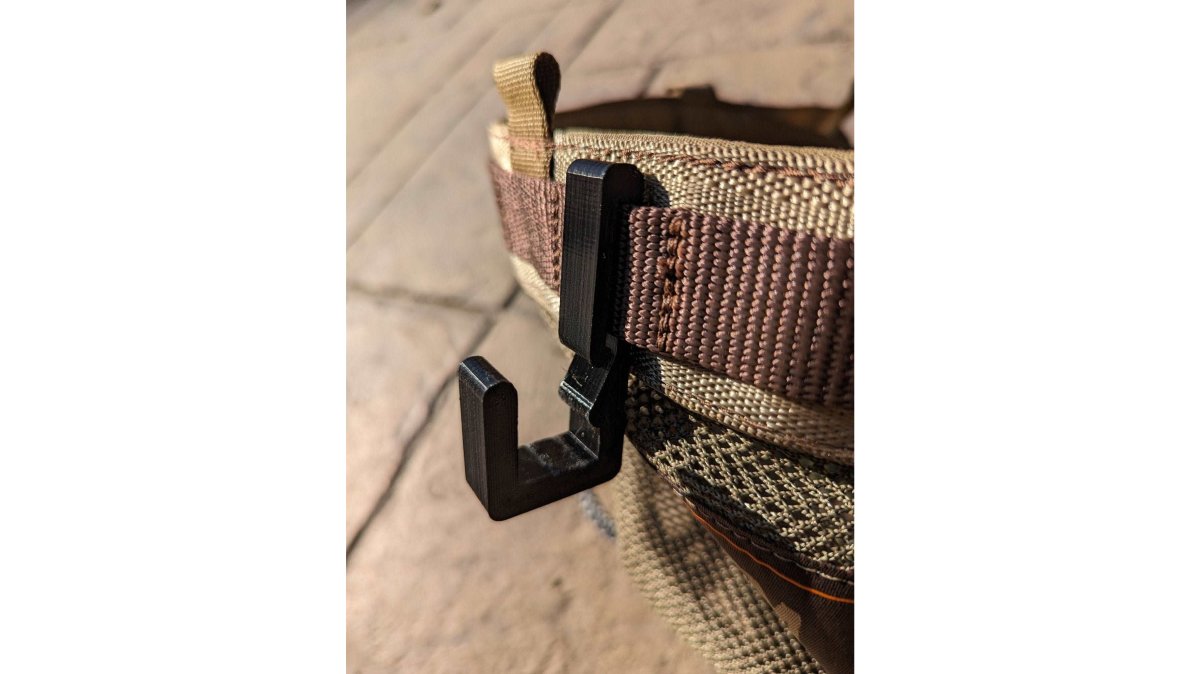
Platform Hangers vs. Platform Caddies
A platform hanger is a MOLLE hook that holds the platform against your saddle or the tree while you work. The Saddle Platform Hanger ($13.00) is 1/2 inch wide, printed in PETG, and sized to your platform's depth or thickness, a Trophyline EDP takes the 3/4-inch size.
Pack Integration for Platform and Sticks
The BOTTOMLAND: Pack Rat ($139.99) ties the system together: a universal platform and stick carrier with a center channel that locks the platform in place, plus vertical stick carry that keeps sticks from catching on brush.
| Feature | Pack Rat (Original) | Pack Rat XL |
|---|---|---|
| Height | 14.5 in | 16 in |
| Width | 17.5 in | 20 in |
| Weight | 2.1 lbs | 2.6 lbs |
| Platform fit | Standard platforms | Up to 18.5 in wide |
Saddle Hunting Bow Hanger and Release Management
A bow hanger that swings or a release lost in a pocket will cost you a shot. Both need a fixed, quiet home within arm's reach of your shooting position.
Tether, Rope, and Bridge Management Accessories
Tether and bridge management separates experienced saddle hunters from beginners. A tether that drifts creates slack, and slack creates a longer fall before the system catches. Managing rope is a safety habit, not a comfort upgrade.

Stealth and Noise Reduction: Quiet Gear for Mobile Hunting
Noise is the accessory problem nobody photographs. A bracket that rattles against a stick, a carabiner that clinks on a platform, or a rope that slaps a tree will end a hunt before you see a deer. The fix is a contact-point audit: find every place two hard surfaces can touch, then separate them.
The Five Contact Points That Make Noise
Almost all accessory noise on a saddle rig comes from one of five interfaces. Check each before the season.
- Stick bracket to stick. A caddy or hanger mounted with a single stainless screw can develop play after a season of flexing, and that play is a rattle. Check screw torque before every hunt and add a thin rubber or TPU washer under the bracket if the fit has loosened.
- Stick to stick. Stacked sticks clack on the walk in. A caddy that holds each stick in a fixed channel removes the problem; if your sticks still touch, a strip of adhesive-backed loop material on the contact face kills the ring.
- Platform to bracket. A platform that shifts in its caddy or hanger under load will tick against the bracket. Fit matters more than padding: a bracket sized to your platform's actual depth or thickness (the 3/4-inch size for a Trophyline EDP) holds it without a gap, so there is nothing to move.
- Carabiner to metal. Quick links, carabiners, and metal D-rings are the loudest single item on most rigs. Stealth tape or a TPU sleeve over the carabiner spine removes the metal-on-metal ring without affecting the gate.
- Rope to tree or rope to rope. A tether or bridge slack enough to swing will slap bark or another rope. This is a management problem, not a padding problem, see the rope and bridge section above.
Material Choice: Why PETG and TPU Beat Aluminum Here
A polymer bracket absorbs small impacts an aluminum one transmits. PETG has enough stiffness to hold a platform or stick without flexing under load, and TPU 95A has enough give to grip a release or rope without rattling. Aluminum survives more abuse and takes a higher load rating, but for accessories that only carry gear, not you, polymer is quieter and lighter for the same job.
A Pre-Season Quiet Test
Stand in your yard in the dark, put on the full rig, walk 50 yards, climb one stick, and set the platform. Listen for ticks, rings, and slaps, every sound you hear in the yard is a sound a deer hears at 20 yards. Fix the loudest one first, then repeat. Two passes usually leaves only your own breathing.
Early-Season Scent and Insect Control
The Thermacell Caddy ($13.00) belongs in this conversation for early season. It hooks to any strap or MOLLE loop on the tree, pack, or saddle, keeping the unit off the ground and away from your boots. Hanging it at chest height also keeps the repellent cloud between you and the ground cover where mosquitoes stage.
Conclusion: Building a Cohesive Saddle Hunting System for 2026
The hard part of saddle hunting is not choosing a saddle. It is building a setup where every piece has a home, mounts to the same standard, and stays quiet when you move. That is the argument for modular gear, and why we design everything around 1-inch MOLLE and reusable brackets.
Conditioning: The Accessory You Cannot Buy
Saddle hunting asks your hips, knees, and lower back to hold a position a treestand seat never demanded. A four-hour sit is a static hold, and static holds are a fitness problem before a gear problem. A short daily routine pays off more than any single purchase:
- Hip flexor and hamstring mobility. Tight hips pull your pelvis into a posterior tilt and load your lower back instead of your sit bones. A few minutes of hip flexor stretching and hamstring work most days makes a long sit noticeably more comfortable.
- Core endurance, not core strength. Planks and side planks held for time train the deep stabilizers that keep you upright in a saddle. A max-effort crunch does not.
- Knee and ankle prep. If you climb with aiders or one-stick, your knees and ankles take repeated loaded flexion. Single-leg step-ups and calf raises build tolerance.
- Practice sits. Set your saddle at ground level and sit for 30 minutes while you watch TV. You will find pressure points and adjustments long before you find them at 20 feet in the dark.
Durability: What to Inspect After 50 Hunts
Gear coverage is almost entirely new-product focused. The more useful question is how a setup holds up after a full season. Printed brackets, rope, and webbing wear in predictable places, and a five-minute end-of-season inspection catches most failures before they matter.
- Printed brackets (PETG/TPU). Look for stress marks, a whitish haze or fine crazing, at the screw hole and clip or hook opening. Crazing means the part is flexing more than it should. Replace it rather than watching it; a bracket is cheap, a failure at height is not.
- Screw and hardware. Stainless screws in a polymer bracket can wallow out the hole. Check for play by hand; if the bracket moves on the screw, the hole has enlarged and the part is done.
- Rope and tether. Run a hand along the full length and feel for glazing, flat spots, or stiffness. Any of those means the rope has taken damage and should be retired. Follow the manufacturer's inspection guidance rather than a fixed number of seasons.
- Webbing and stitching. Check the saddle's bridge, lineman loops, and any sewn accessory loop for fraying, pulled stitches, or fading that suggests UV degradation. Webbing is the cheapest thing to replace and the most expensive to ignore.
- MOLLE and clip points. A stretched MOLLE loop will let a caddy swing. If a loop no longer holds a clip snugly, that is a wear item, not a fit problem.
Putting It Together
3D Hunting Solutions prints every accessory in-house, tests it in the field, and offers custom design work when a stock part does not fit your platform or stick. The Pack Rat handles platform and stick carry, the caddies and hangers keep gear staged, and the tether and bridge clips keep rope where it belongs. For a setup that works as one system instead of a pile of parts, start with the pieces that solve your two biggest friction points and build from there, then keep up the conditioning and end-of-season inspection that make the system last years, not one October.
Frequently Asked Questions
What are the best saddle hunting accessories for 2026?
For 2026, focus on a modular system. Key saddle hunting accessories include a platform hanger for secure carry, a climbing stick caddy to keep sticks organized, a tether rope clip to prevent slack, and a bow hanger or release holster for quick access. Prioritize gear that integrates with your existing molle loops and saddle setup to reduce weight and improve efficiency.
How do 3D printed accessories improve saddle hunting efficiency?
3D printed accessories, like those from 3D Hunting Solutions, are designed for specific tasks such as holding a platform, managing ropes, or securing a release. They add minimal weight, often integrate directly with molle webbing, and keep gear exactly where you need it. This reduces fumbling, noise, and wasted movement, which is critical when a shot opportunity arises.
What is the best saddle hunting platform setup for mobile hunters?
A streamlined mobile hunting platform setup typically includes a lightweight platform, a dedicated hanger or caddy to carry it on your saddle or pack, and a way to secure it quietly. For example, the Saddle Platform Hanger ($13.00) or Saddle Platform Caddy ($16.00) from 3D Hunting Solutions keeps your platform accessible and secure while climbing, eliminating the need to set it down or struggle with straps.
Do I need a bow hanger for saddle hunting?
A saddle hunting bow hanger is essential for keeping your bow accessible and off the ground while you're in the tree. It allows you to hang your bow within easy reach, reducing movement and noise when a deer approaches. Look for a hanger that attaches securely to your saddle's molle loops or a gear strap, and consider one that also holds your release for a complete bow management system.
How do I choose the right climbing stick accessories for saddle hunting?
When selecting saddle hunting climbing sticks accessories, consider your stick model and carry method. A stick caddy, like the Hawk Helium Stick Caddy ($15.00), keeps your sticks organized and silent during transport. A stick hanger, such as the Tethrd One / Skeletors Climbing Stick Hanger ($8.50), allows you to hang sticks on your saddle while climbing. Match the accessory to your specific stick brand and your preferred attachment method (molle or belt).