Table of Contents
- Why Durability Matters for 3D Printed Hunting Accessories
- PETG vs PLA for Hunting Gear: Which Filament Holds Up?
- Best Materials for Outdoor 3D Printing: Filament Selection Guide
- How to Design 3D Prints for Strength: Load-Bearing Principles
- Real-World Durability: Field Testing and Failure Modes
- Post-Processing and Weatherproofing Your 3D Printed Gear
- What to Look For When Buying 3D Printed Hunting Accessories
- Frequently Asked Questions
Last Updated: September 16, 2026
Why Durability Matters for 3D Printed Hunting Accessories
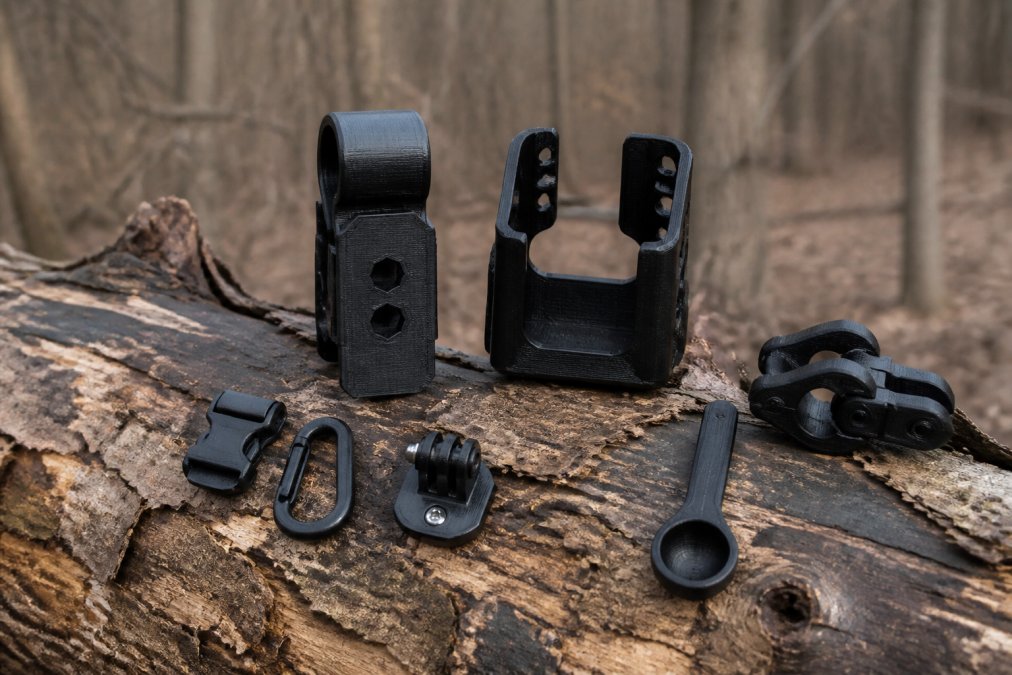
The question "are 3D printed hunting accessories durable" gets asked in every saddle hunting forum, and the answer depends on how the part was designed and printed. A climbing stick caddy or bow hanger printed with the right filament, wall thickness, and print orientation can survive seasons of hard use. The same part printed carelessly will crack the first time it takes a load. At 3D Hunting Solutions, we design and print every accessory in-house and test it in real hunting scenarios before it ships, because a gear failure 20 feet up a tree isn't a warranty issue, it's a safety issue.

Climbing sticks, bow hangers, and gear clips take repeated impact, constant UV exposure, and temperature swings from a warm truck cab to a freezing pre-dawn stand. A part that holds up in the workshop but fails in the field is worse than useless.
3D printed gear can be genuinely durable when you understand the material science and design rules behind it.
PETG vs PLA for Hunting Gear: Which Filament Holds Up?
PETG is the better choice for most hunting accessories, while PLA is best reserved for prototypes and display pieces. The reason comes down to impact resistance and thermal stability, which matter more in the field than raw stiffness.
PLA is stiff and prints easily, but it's brittle: drop a PLA bracket on a cold morning and it can shatter along a layer line.
Layer Adhesion and Impact Resistance
Layer adhesion is the single biggest weakness of any 3D printed part, and it's where most field failures start. Because a printed object is built one layer at a time, the bond between layers is weaker than the material itself, and impact failures usually split along a layer line rather than breaking across the solid plastic.
Best Materials for Outdoor 3D Printing: Filament Selection Guide
For outdoor gear, PETG is the practical default and ASA is the step up when UV and heat exposure are extreme. PLA is the wrong tool for anything that lives outside.
Here's how the common filaments compare for hunting accessories:
| Filament | UV Resistance | Impact Resistance | Heat Tolerance | Cold Performance | Best For |
|---|---|---|---|---|---|
| PLA | Low | Low | Low | Poor (brittle) | Prototypes, indoor use |
| PETG | Good | Good | Moderate | Good | Most hunting accessories |
| ASA | Excellent | Good | High | Good | Long-term sun and heat exposure |
| Nylon (PA) | Moderate | Excellent | Moderate | Excellent | High-stress load-bearing parts |
| Polycarbonate (PC) | Good | Excellent | High | Good | Demanding structural parts |
UV Resistance and Thermal Stability
UV resistance and thermal stability separate a part that lasts one season from one that lasts five. Sunlight breaks down polymer chains, so a part that isn't UV-stable will chalk, fade, and grow brittle. Thermal stability determines whether it keeps its shape through hot afternoons and cold mornings without warping or cracking.
Matching Filament to the Part, Not the Hype
The right filament depends on where the part sits and what it does. A bow hanger mounted through summer sun and winter cold wants ASA. A climbing stick caddy banged against tree bark and tossed in a truck bed wants PETG or nylon for impact toughness. A gear clip holding light accessories can be PETG. A part carrying body weight or a loaded pack should be nylon or polycarbonate, printed with the layer orientation discussed below.
How to Design 3D Prints for Strength: Load-Bearing Principles
Designing a 3D print for strength means controlling three variables: infill density, wall thickness, and print orientation. Get these right and a printed part can carry serious load. Get them wrong and it fails under the weight of a climbing stick.

Infill Density, Wall Thickness, and Print Orientation
A practical starting point for load-bearing accessories: 4 to 6 walls, 40 to 60 percent infill, and a print orientation that keeps layer lines parallel to the primary load. Increase walls before infill, since perimeter strength does more for durability than a dense interior.
Real-World Durability: Field Testing and Failure Modes
Field testing separates a part that works on a bench from one that works in a tree. Every accessory we make gets used in actual hunting conditions, because field loads are impossible to fully simulate in a workshop. The more useful question isn't whether a part will eventually fail, it's how it fails, and whether that failure is safe.
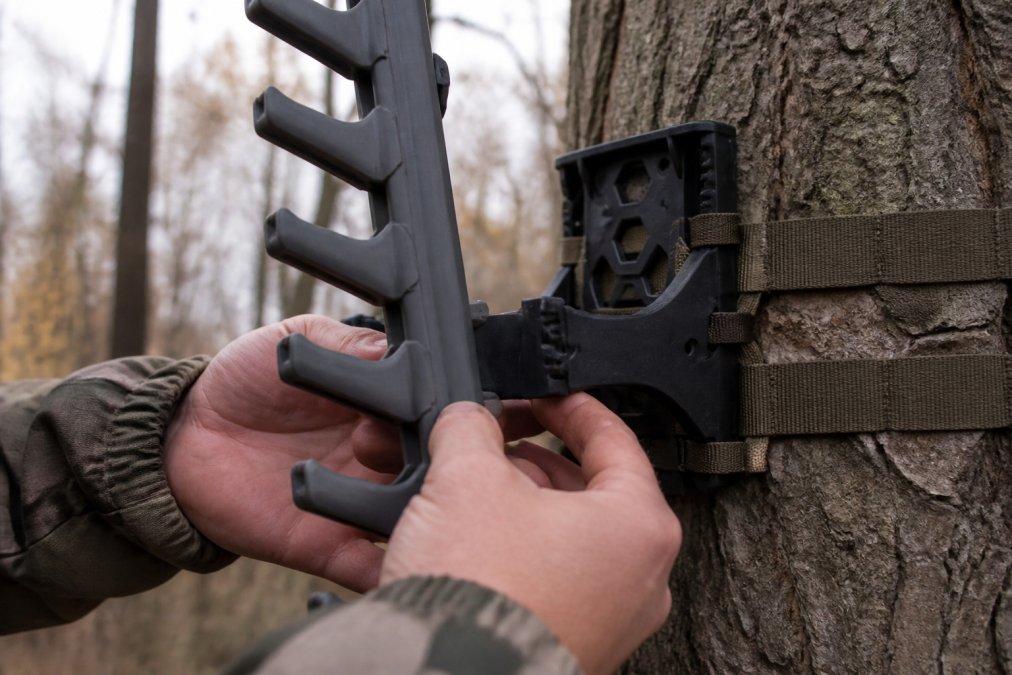
- Layer delamination: the part splits along layer lines, usually from poor layer adhesion or the wrong print orientation
- Brittle fracture: a sharp impact cracks the part, most often with PLA or over-cooled prints
- Stress cracking at corners: sharp internal corners concentrate force and start cracks over repeated use
- UV embrittlement: long sun exposure makes the surface brittle and prone to cracking
- Thermal warping: heat softens the part and it loses its shape under load
- Creep under sustained load: a part held under constant tension slowly deforms, even at temperatures well below its softening point
Designing for Fail-Safe, Not Fail-Catastrophic
A printed part that holds a bow or gear clip should be designed so that when it eventually fails, it fails without dropping gear on your head or leaving you stranded 20 feet up.
Legal and Ethical Considerations for Printed Gear
Whether 3D printed parts are permitted where you hunt or compete is worth checking. Rules vary widely: some archery and hunting competitions restrict aftermarket or non-commercial equipment, and some land-management areas have equipment rules a printed accessory could fall under. Before relying on a printed part for a competition or managed hunt, check the specific rules for that event or area.
What Real Field Testing Looks Like
A part that passes a bench test hasn't been tested. Real field testing means repeated cycles of actual use: clipping and unclipping a caddy dozens of times, hanging a loaded bow through a full sit, leaving the part mounted through sun and rain, then inspecting for early signs of the failure modes above, hairline cracks at corners, whitening along layer lines, or a slight permanent bend.
Post-Processing and Weatherproofing Your 3D Printed Gear
Post-processing improves durability by sealing layer lines and protecting the surface from UV and moisture. Even a well-printed part benefits from a few finishing steps.
What to Look For When Buying 3D Printed Hunting Accessories
When buying printed gear, the material and design tell you more than the marketing copy. Ask what filament the part uses, how thick the walls are, and how it was oriented for printing. A maker who answers those clearly usually understands durability.
Frequently Asked Questions
How long do 3D printed hunting accessories last?
Lifespan depends on filament choice, design, and UV exposure. PETG and ASA accessories used in moderate conditions can last multiple seasons. Parts printed in PLA may degrade faster outdoors due to heat sensitivity. Regular inspection of layer adhesion, stress points, and UV damage helps you catch wear before failure. For gear used 30 feet up a tree, replace any part showing cracks or whitening immediately.
Do 3D printed hunting accessories hold up to extreme temperatures?
It depends on the filament. PLA softens around 140°F, which is a problem in a hot truck or direct summer sun. PETG handles up to about 176°F, and ASA holds up to roughly 200°F. For backcountry hunters dealing with temperature swings from dawn to midday, ASA or PETG is the safer choice. Always check the material's thermal stability rating before trusting a part with load-bearing gear.
Are 3D printed bow hangers and stick caddies strong enough for heavy gear?
Yes, when designed and printed correctly. Strength comes from wall thickness, infill density, print orientation, and filament choice. A caddy printed in PETG with 4 to 6 walls and 40% or higher infill handles the weight of climbing sticks and a bow without issue. The weak points are usually layer lines and stress concentrations, so orient prints so layers run perpendicular to the load direction.
What design factors influence the durability of 3D printed hunting tools?
Four factors matter most: print orientation, wall thickness, infill density, and stress concentration. Layers are weakest along their seams, so orient parts so force pulls across layers, not between them. Increase wall count to 4 to 6 for load-bearing parts. Use 40% or higher infill for structural pieces. Round sharp internal corners to spread stress. These choices matter more than the filament brand for most hunting accessories.
The gap between printed gear that fails and printed gear that lasts comes down to design discipline, not luck. At 3D Hunting Solutions, every accessory is engineered and printed in-house, field-tested by a hunter who uses the same gear, and built for the specific demands of mobile and saddle hunting. If you want accessories designed to survive real conditions rather than just look good in a photo, explore the lineup and see the difference for yourself.